If you named the hottest rivalry in anti-aging skincare in 2026, it would be retinol and bakuchiol. One is the decades-proven gold standard; the other is the newcomer rising as the “natural alternative.” Which leads to the question: “Which one should I use?”
But this question has a more interesting answer than you’d expect.
The short answer
Here’s the verdict: this isn’t about which is better — it’s about which is right for you. Retinol is more powerful and more proven but comes with irritation; bakuchiol is gentler but its evidence is still building. And, surprisingly, you can use them together.
Let’s cover each, then get to who should pick which, and how to combine them.
Retinol, in 30 seconds
Retinol is a form of vitamin A and the decades-proven “gold standard” of anti-aging. It speeds up cell turnover and stimulates collagen production, improving wrinkles, texture, and pigmentation.
That power comes with irritation (dryness, flaking, redness, purging), it increases UV sensitivity so it’s hard to use during the day, and it’s advised against during pregnancy.
Bakuchiol, in 30 seconds
Bakuchiol comes from the seeds of the babchi plant and is known to deliver retinol-like effects far more gently. It’s not vitamin A, nor a retinoid, and it works through a different pathway. It has no purging, and its good photostability means you can use it during the day.
That said, it’s less studied than retinol.
More on bakuchiol → What Is Bakuchiol? The Gentle Retinol Alternative Explained (2026)
The key difference: power vs gentleness
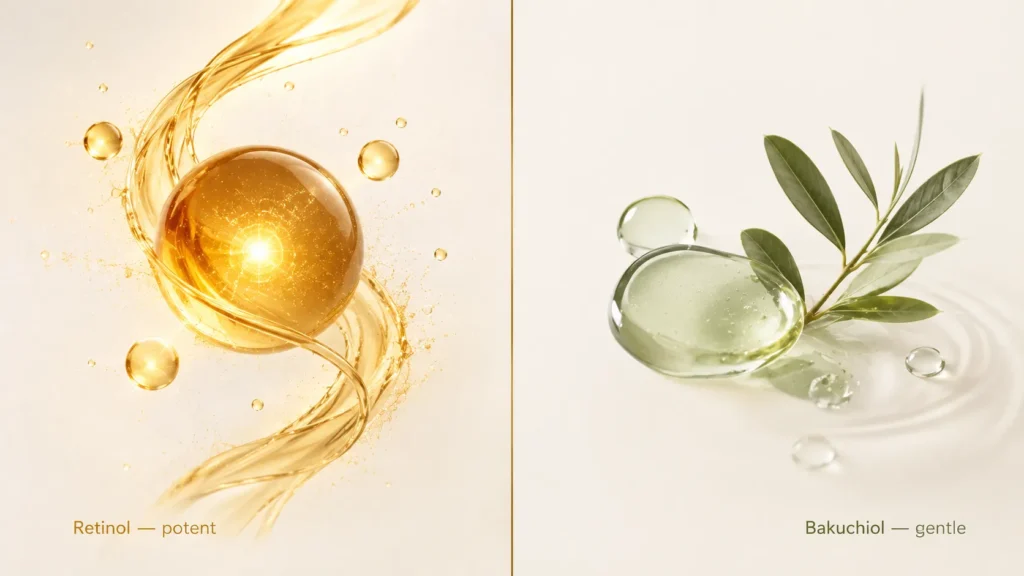
The core difference between the two is “power and proof” versus “gentleness.”
Retinol is more powerful, with decades of evidence for acne, deep wrinkles, and pigmentation. It’s the reference point for anti-aging.
Bakuchiol is gentler. With almost no irritation or purging and daytime usability, it’s an alternative for skin that can’t tolerate retinol.
Here’s the interesting part — their effects are closer than you’d think. In a 2018 British Journal of Dermatology study, 0.5% bakuchiol and 0.5% retinol were compared over 12 weeks: improvements in wrinkles and pigmentation were comparable, while bakuchiol caused significantly less irritation. But there aren’t many such studies yet, so it doesn’t have retinol’s accumulated evidence.
Side by side
| Retinol | Bakuchiol | |
|---|---|---|
| What it is | A vitamin A derivative | Plant-derived (babchi seed) |
| Strengths | Wrinkles, texture, pigmentation, acne | Gentle anti-aging, soothing |
| Irritation | Yes — dryness, flaking, purging | Gentle — little to no purging |
| Evidence | Decades of robust research | Building — a 2018 trial and more |
| Sun sensitivity | Increases it — not ideal for daytime | Good photostability — daytime OK |
| Pregnancy | Advised against | Considered lower-risk, but not confirmed* |
| Best for | Resilient, tolerant skin | Sensitive, reactive, beginners |
| Using together | Works (cycling) | Works |
*See the dedicated section below on pregnancy — always consult a professional.
So which should you choose?
By skin and situation, here’s the breakdown.
When retinol fits. If you have a clear concern like acne or deep wrinkles and healthy skin that tolerates some irritation, proven retinol is powerful.
When bakuchiol fits. If your skin is sensitive or reactive and retinol’s irritation is a burden, or you want an anti-aging ingredient you can also use during the day, bakuchiol fits. It’s also gentle enough to be a great starting point for beginners.
Using them together: retinol cycling
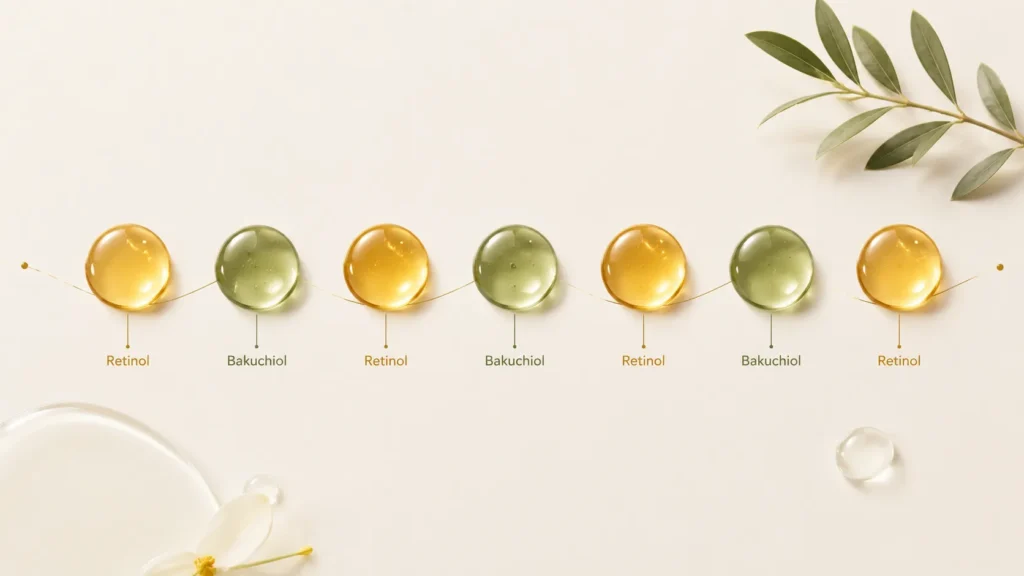
Want both? You can use them together. In fact, bakuchiol is known to enhance and stabilize retinol’s activity.
The most common method is “retinol cycling.” You use retinol 2–3 nights a week and bakuchiol on the off nights — keeping retinol’s benefits while reducing irritation. Alternatively, you can split them: bakuchiol in the morning (since it’s stable in daylight) and retinol at night.
Introduce new ingredients one at a time to watch how your skin responds, and on days you use retinol, always wear sunscreen.
Curious about pairing retinol with other recovery ingredients? → PDRN vs Retinol: Which Should You Use? (2026)
Pregnancy and nursing: always with a professional
One big reason bakuchiol draws attention is pregnancy and nursing. Because retinol is advised against during pregnancy, bakuchiol comes up as an alternative.
But this calls for caution. While bakuchiol is considered “lower-risk” than retinol, its safety during pregnancy is not “confirmed.” There isn’t enough research and experts disagree. So if you’re pregnant, nursing, or trying to conceive, decide only after consulting an OB-GYN or dermatologist.
This article is for information, not medical advice.
Frequently asked questions
Does bakuchiol work as well as retinol? In the 2018 trial, its improvements in wrinkles and pigmentation were comparable to retinol’s, with less irritation. But retinol has more accumulated evidence.
Which is better? It’s a match, not a ranking. For power, acne, and deep wrinkles, retinol; for gentleness, sensitive skin, and daytime use, bakuchiol.
Can I use them together? Yes. Alternating them via “retinol cycling” keeps the benefits while reducing irritation. Bakuchiol is also known to stabilize retinol.
What about during pregnancy? Bakuchiol is considered lower-risk than retinol, but its safety isn’t confirmed. Always consult an OB-GYN or dermatologist.
Which is better for acne? Retinol. It’s strong at managing pores and oil. Bakuchiol is relatively weaker here.
Which should a beginner start with? Bakuchiol is gentle, making it a good starting point with less worry about irritation.
The bottom line
Bakuchiol vs retinol isn’t about who wins — it’s about what’s right for you. If you want power and proof and can tolerate irritation, retinol; if you want gentleness and daytime use, or have sensitive skin, bakuchiol. And if you want both, use them together via cycling. If you’re pregnant, don’t forget to consult a professional. The answer isn’t a single one — it’s the choice that fits your skin.