You applied retinol for its anti-aging benefits. A few days later your skin is red, flaking, and stinging. Anyone who’s used retinol knows the misery of this “adjustment period.” So a lot of people give up partway — or go looking for something gentler.
Lately, the gentler alternative people keep naming is PDRN. So can PDRN replace retinol? Here’s the twist.
The short answer — and what’s easy to miss
Here’s the verdict: these two aren’t replacements for each other. Retinol and PDRN do different jobs, and their approaches are essentially opposites. And surprisingly — they actually have synergy when used together. That’s because PDRN helps buffer retinol’s irritation.
Let’s cover each, then get to how you combine them.
Retinol, in 30 seconds
Retinol is a form of vitamin A and the decades-proven “gold standard” of anti-aging. It speeds up skin cell turnover and stimulates collagen production, improving fine lines, texture, and pigmentation. With consistent use, changes generally show over 8–12 weeks.
That power comes at a cost. It can cause dryness, flaking, redness, and a temporary breakout phase called “purging.” It also increases sensitivity to UV, so daytime sunscreen is essential, and dermatologists advise avoiding retinoids during pregnancy.
PDRN, in 30 seconds
PDRN is a fragment of purified salmon DNA, an ingredient said to help skin repair and rebuild itself. Rather than pushing the skin, it works by triggering the skin’s own repair signals — so it’s gentle and suits sensitive skin well. Its focus is barrier recovery and calming redness.
That said, topical PDRN has large molecules that mostly act on the surface, and its effects differ from an injectable procedure.
More on PDRN → What Is PDRN Skincare? The Salmon DNA Trend Explained (2026)
The key difference: opposite approaches
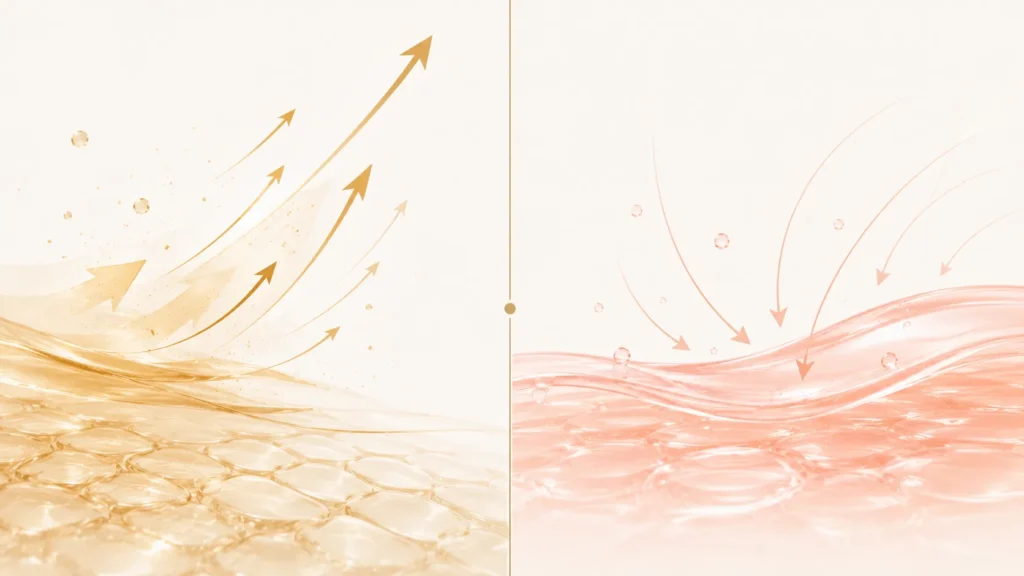
The biggest difference between the two is their philosophy.
Retinol is “out with the old, in with the new.” It actively drives cell turnover, sloughing off old skin to reveal new. It works from the outside in — fast results, but with irritation.
PDRN is “heal the old to make it young.” Instead of forcing the skin, it helps it recover on its own. Gentle, but it works gradually.
So if retinol is active “remodeling,” PDRN is gentle “recovery support.” Opposite directions. And it’s precisely that opposite nature that lets them complement rather than compete.
Side by side
| Retinol | PDRN | |
|---|---|---|
| What it is | A vitamin A derivative | A salmon DNA fragment |
| How it works | Speeds up cell turnover — it pushes the skin | Supports the skin’s own repair — it helps the skin |
| Strengths | Wrinkles, texture, pigmentation | Barrier recovery, calming redness |
| Irritation | Yes — dryness, flaking, purging | Gentle |
| Evidence | Decades of robust research | Still developing; topical works at the surface |
| Sun sensitivity | Increases it — daytime SPF is essential | Not applicable |
| Best for | Resilient skin that tolerates actives | Sensitive, reactive, or recovering skin |
| Using together | Works — apply retinol second | Works — apply PDRN first |
So which should you choose?
Let’s break it down by goal.
When retinol fits. If smoothing wrinkles and texture is the priority and you have healthy skin that tolerates some irritation, retinol is the proven choice.
When PDRN fits. If your skin is sensitive, reactive, or stressed and in need of recovery, PDRN takes care of it gently. It suits skin that’s tired of acids or retinol especially well.
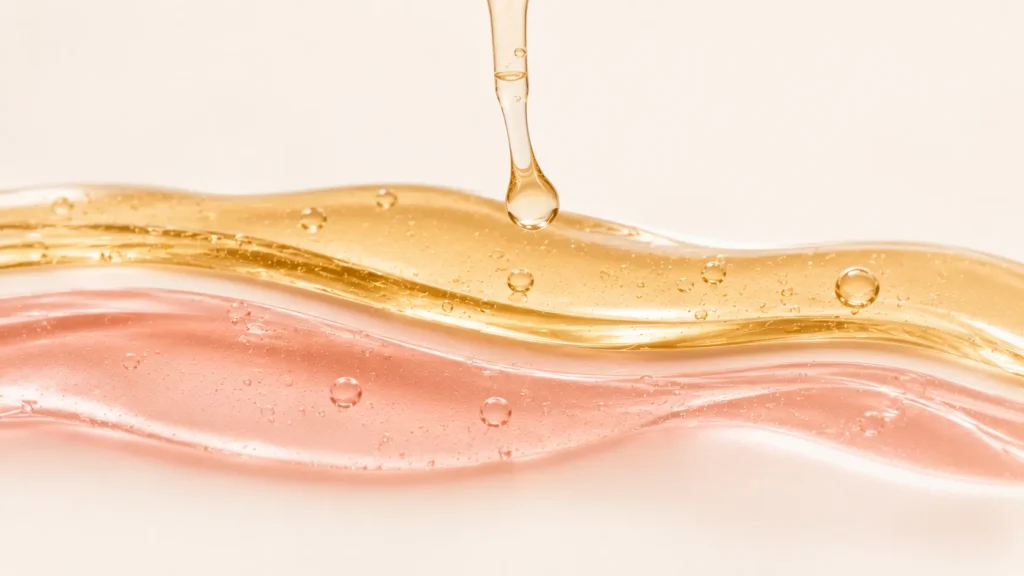
Using them together (the key). If you want both, you can use them together — and they actually pair well. The important part is the order. Apply PDRN first, and once it’s fully absorbed, layer retinol on top. PDRN is understood to help buffer inflammation so skin tolerates retinol better.
If irritation is a concern, alternating is another option — for example, PDRN in the morning for recovery, retinol at night for improvement.
Note: if both are new to you, introduce one at a time and watch how your skin responds. On days you use retinol, always wear sunscreen; if you’re pregnant or have significant skin concerns, consult a dermatologist. This article is for information, not medical advice.
Frequently asked questions
Is PDRN better than retinol? It’s not better — it does a different job. Retinol is still strong for wrinkles and texture; PDRN is better for recovery and calming redness. They’re ingredients with different goals.
Can I use them together? Yes, they pair well. Apply PDRN first, and once it’s fully absorbed, layer retinol. PDRN is understood to help buffer retinol’s irritation.
What’s the order? PDRN first → fully absorb → retinol → moisturizer. If irritation is a worry, alternate — PDRN in the morning, retinol at night.
What about sensitive skin? PDRN suits it, being gentle. Retinol is irritating, so introduce it slowly from a low concentration.
Do I have to wear sunscreen with retinol? Yes. Retinol increases UV sensitivity, so daytime sunscreen is essential.
How do I spot PDRN on an ingredients list? It’s listed as Sodium DNA, Polydeoxyribonucleotide, or Sodium Polydeoxyribonucleotide — all the same ingredient.
The bottom line
PDRN vs retinol isn’t an either/or. Retinol actively pushes to improve wrinkles and texture; PDRN gently supports recovery to care for the barrier and redness. Because their approaches are opposite, using them together actually complements. PDRN first, retinol after — keep that order and you cut irritation while keeping the benefits. Choose based on what your skin needs right now: improvement, recovery, or both.