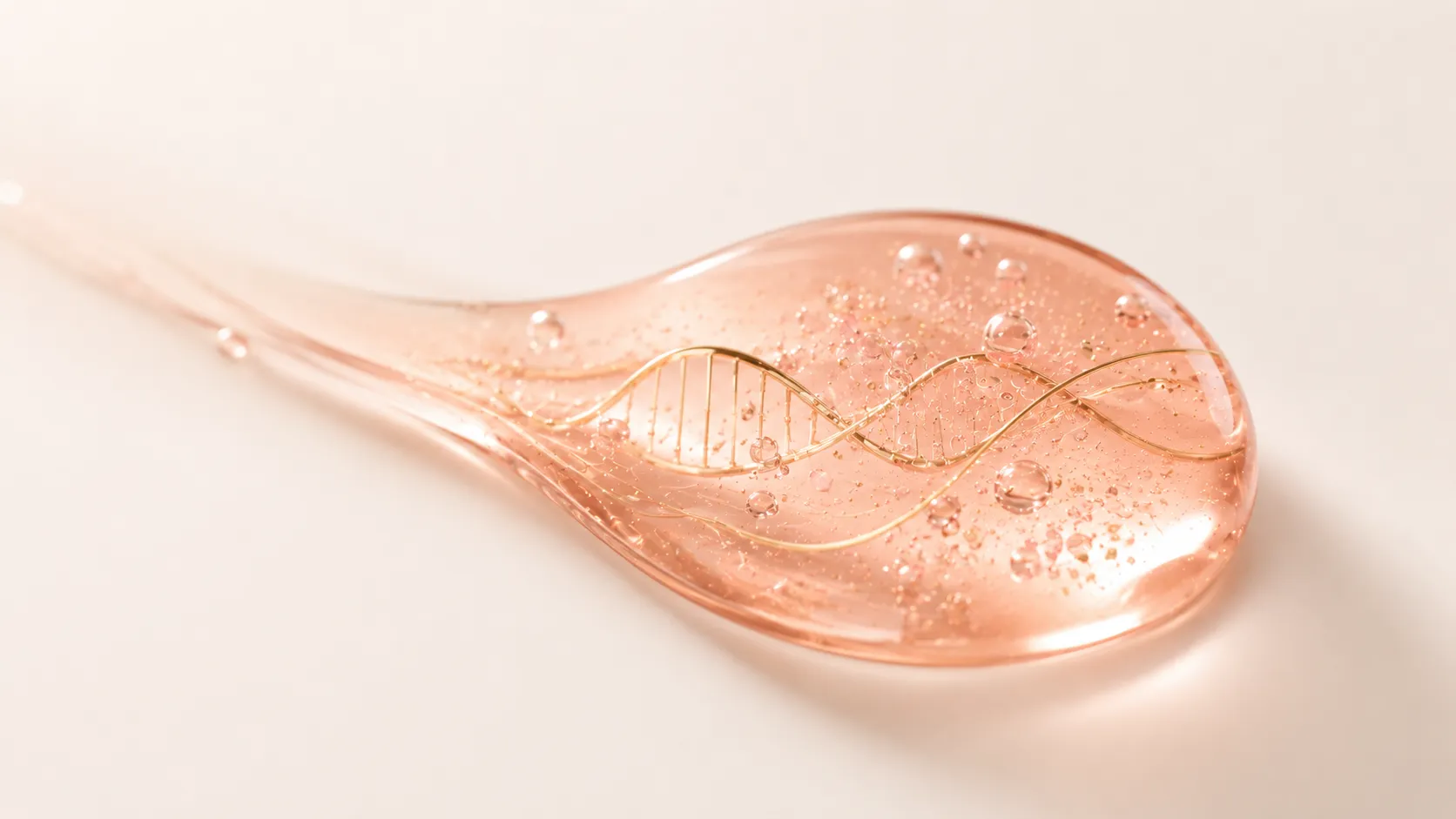
Salmon DNA in your skincare. It sounds like something a villain in a sci-fi movie would try to sell you. And yet this ingredient has become one of the hottest things in K-beauty in 2026. If you’ve opened TikTok, walked past an Olive Young, or read a single “2026 K-beauty trends” article, you’ve already met it. It’s called PDRN.
So does this strange — frankly bizarre-sounding — ingredient actually work? And there’s one important fact hiding here that most viral content glosses right over.
The short answer — and the thing nobody spells out
First, the verdict: PDRN is an ingredient with real evidence behind it. But here’s the most important distinction. PDRN comes in two very different forms — an injectable treatment done in a clinic and a topical product you apply at home — and their effects are quite different.
Buy a product without understanding that difference, and you’re likely to be disappointed. So this article draws that line clearly. It’s the one thing you need to know before you spend a dollar.
What exactly is PDRN?
PDRN stands for polydeoxyribonucleotide — fragments of DNA extracted from salmon or trout. Specifically, it comes from the milt (the reproductive cells) of the fish.
“Salmon DNA” might make you wince, but there’s a reason behind it: salmon DNA is remarkably close to human DNA at the molecular level. That makes it highly biocompatible and low-risk for skin once purified. During manufacturing, the raw material is filtered and sterilized down to a cosmetic or medical grade.
In other words, the science behind the attention-grabbing “salmon DNA” name is more ordinary than the headline suggests — an ingredient known for supporting skin repair and recovery.
Why is it suddenly everywhere?
What makes PDRN interesting is that, unlike most viral ingredients, it didn’t start as a marketing campaign — it started in clinics.
Korean dermatology has long used PDRN injections to support wound healing and skin repair. As the ingredient moved into topical serums and creams, people could try it at home without paying clinic prices. Add TikTok’s “glass skin secret” buzz, and it exploded.
The big shift in skincare for 2026 is the move from “anti-aging” to “skin repair and longevity” — and PDRN became its poster ingredient.
The key part: injectable vs topical
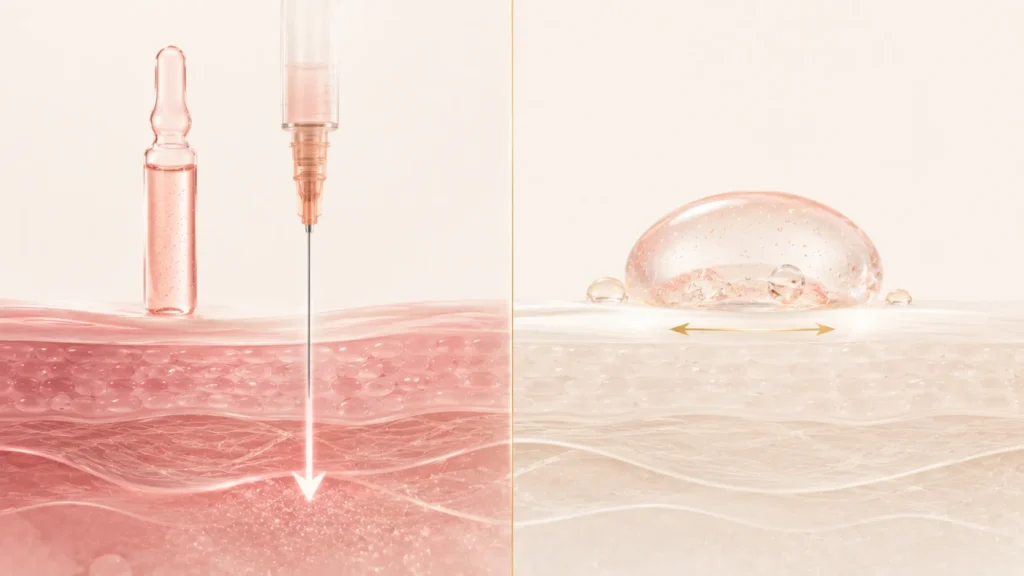
This is the most important section of the article. It’s also the part most content blurs.
Injectable treatment (clinic). PDRN is injected into the dermis with a needle. Because it bypasses the skin’s surface barrier, it can reach deeper layers, and studies have reported improvements in elasticity, fine lines, and wound healing. This is what made PDRN famous in the first place.
Topical product (home). You apply it as a serum or cream. But there’s a physical limit here. PDRN molecules are very large — 50,000 to 1,500,000 daltons — while the skin barrier generally blocks molecules over 500 daltons. So topical products mostly act on the skin’s surface and upper layers.
Here’s the takeaway: injections aim for deep renewal, while topical products realistically offer surface hydration, barrier support, and mild improvement. As New York board-certified dermatologist Dr. Julie Russak explains, injectable treatments suit deep wrinkles, elasticity, and scars, while topical PDRN fits everyday surface hydration and mild repair.
The claim that a topical matches an injectable hasn’t been established. Knowing that going in is what keeps you from being disappointed.
A legal distinction to know (US)
If you’re in the US, there’s one more thing to know. PN (polynucleotide) injectable treatments generally can’t be legally obtained in the US. Topical cosmetics containing PDRN (serums, creams) are available for cosmetic use, but not approved for injection. In practice, that means the realistic way to try PDRN in the US is a topical product.
What to actually expect from topical PDRN
So what can you realistically expect from a topical PDRN product? Research and user experience point roughly in these directions.
Barrier repair support — helpful for skin stressed by sun, heat, retinoids, or over-exfoliation. Hydration — PDRN products are almost always formulated with humectants like hyaluronic acid, giving a plump, resilient feel. Texture and elasticity over time — with consistent use, improvements are often reported over 8–12 weeks.
The point is maintenance, not a miracle. Topical PDRN is something you use daily over weeks to notice a change — not an overnight transformation.
Note: this article is for information, not medical advice. If you’re considering a procedure, consult a dermatologist.
Who it’s for, and how to start
Topical PDRN is generally gentle, so it’s known as an ingredient most skin types can try. It suits skin that’s compromised or in need of hydration and recovery especially well.
Getting started is like any serum: after cleansing and toner, apply it at the moisturizing stage, and in the morning layer sunscreen over it. Patch-test any new product on your inner arm first.
Curious about other K-beauty ingredients like snail mucin? → Snail Mucin: The Complete Guide (2026)
Frequently asked questions
Does PDRN really work? The injectable form has fairly strong evidence for elasticity, fine lines, and more. Topical products offer surface hydration and barrier support; matching injectable results isn’t established. It’s a gentle, well-tolerated ingredient, but not a “miracle in a bottle.”
Is putting salmon DNA on your skin safe? Salmon DNA is close to human DNA, making it highly biocompatible, and once purified it’s known to be low-risk. Results vary, so a patch test is recommended.
Does a topical work as well as an injectable? Not established. The molecule is large, so topicals mostly act on the surface. For deep renewal, a procedure is a different option — and one to discuss with a dermatologist.
What’s the difference between PDRN and PN? Both are salmon-derived and in the same family. PDRN refers to shorter DNA fragments, PN to longer chains. Formulations differ, so check the label.
When will I see results? Topicals aren’t immediate. With consistent use, many people notice changes over roughly 8–12 weeks.
The bottom line
Despite the attention-grabbing “salmon DNA” name, PDRN is an evidence-backed ingredient that started in the clinic. But the one thing to remember is this: injectable and topical are not the same. Injections aim for deep renewal; topical products realistically offer surface hydration and recovery. Understand that distinction, and you can make smart use of PDRN without the inflated expectations.