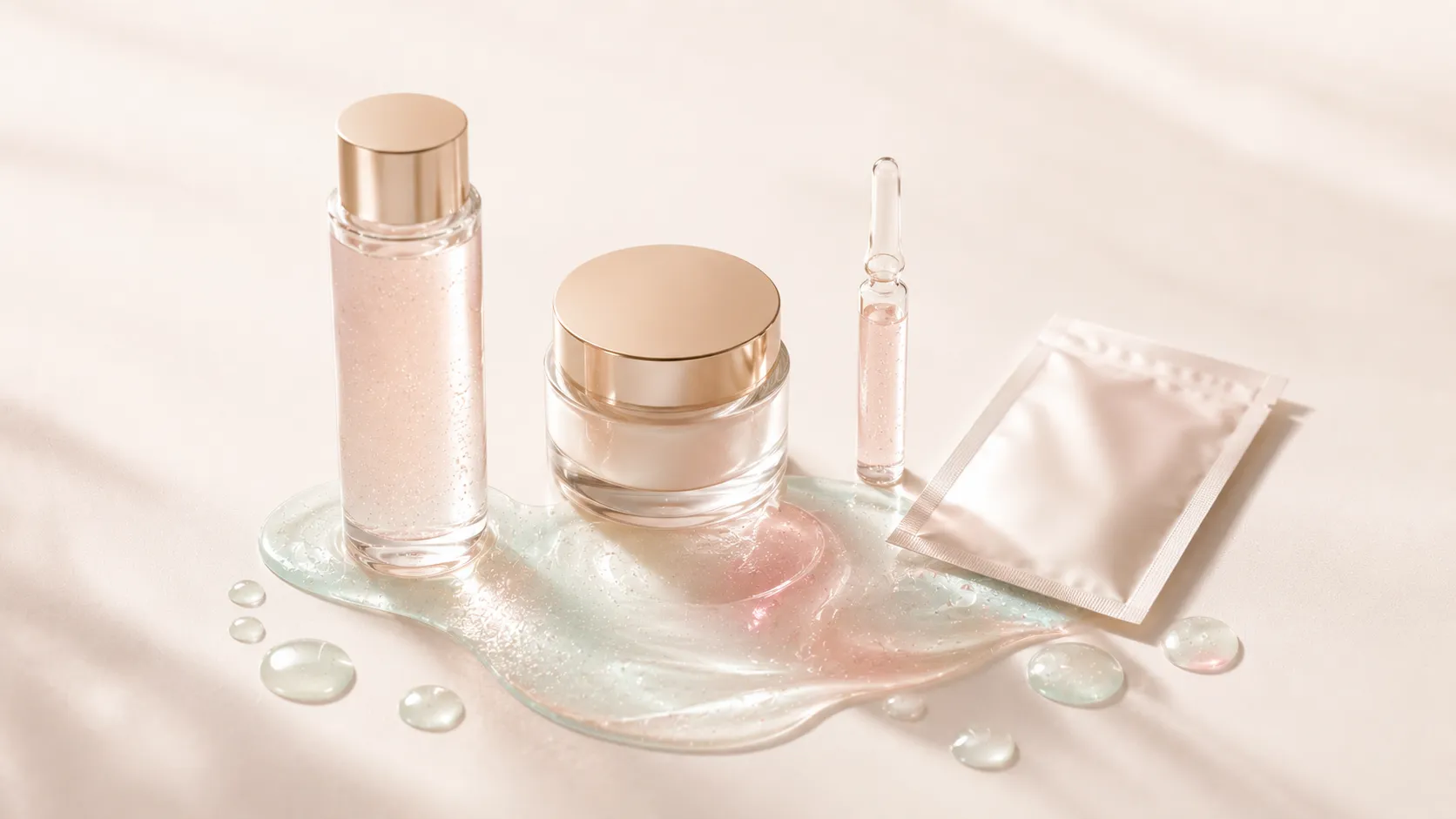
Putting the trail a snail left behind on your face. It sounds off-putting at first — and yet this ingredient is one of the most talked-about things in skincare right now. North America has become the fastest-growing market for snail skincare, and Korean snail essences have turned into global bestsellers.
This guide covers everything you need to know about snail mucin: what it actually is, what the science says, how to use it, and how to choose the right formula for your skin. Get the big picture here, then follow the links to go deeper on whatever matters to you.
What is snail mucin?
On an ingredients list, it appears as “snail secretion filtrate.” It’s the gel-like fluid garden snails produce to protect and repair themselves — a defense against cuts, UV exposure, and environmental stress as they move across rough surfaces.
Here’s the key: the same properties that protect snail tissue also benefit human skin. Snail mucin contains glycoproteins, hyaluronic acid, peptides, and antioxidants.
In other words, snail mucin isn’t a single ingredient but a complex of many working together. That distinction is what sets it apart from the other hydrators we’ll get to below.
Not a fad: 2,500 years of history
It’s easy to assume snail mucin is a recent K-beauty invention, but the history stretches back a surprising 2,500 years.
The ancient Greek physician Hippocrates is recorded to have prescribed crushed snails for skin inflammation. The modern rediscovery came in 1980s Chile, where farmers raising snails for escargot noticed their hands grew softer and their cuts healed faster from handling them. That sparked its popularity in South America, and it later flourished in Korean skincare to become today’s global trend.
The benefits: what the science says
So what does the research actually support? Let’s separate the established from the uncertain.
Hydration. The best-established benefit. Hyaluronic acid, glycoproteins, and similar components draw water into the skin.
Pigmentation marks. A 2013 study in the Journal of Drugs in Dermatology reported that a cream containing 40% snail secretion filtrate significantly reduced post-inflammatory hyperpigmentation (PIH) marks compared with a control.
Antioxidant and environmental protection. In a study exposing a 3D skin model to ozone, the “skin” protected by snail mucus extract showed less inflammation than the unprotected one.
Soothing. Widely used to calm irritated skin.
For balance, though: claims that it erases wrinkles entirely or dramatically heals wounds aren’t sufficiently proven. The accurate read is that snail mucin is a well-supported hydrating and soothing ingredient.
For the studies and evidence in detail → Does Snail Mucin Actually Work? What the Science Says (2026)
Who is it for?
Snail mucin is generally gentle, so most skin types can try it.
Dry skin — rich in hydrating components, so it suits it well. Oily and combination — choose a lightweight essence texture and it sits comfortably. Sensitive — the soothing role can help. Patch-testing is essential. Breakout-prone — generally gentle, but consult a professional for severe acne.
This article is for information, not medical advice.
How to use it
The essentials: snail mucin goes after cleansing and toner, before heavier serums or creams.
Cleanse → Toner → Snail mucin → Serum → Moisturizer → (AM) Sunscreen
Three things to remember: apply to damp skin, press it in rather than rubbing, and use it consistently for weeks. Snail mucin isn’t an instant ingredient.
Step-by-step application and common mistakes → How to Use Snail Mucin: The Right Order & Routine (2026)
How it differs from other hydrators
The most common comparison is with hyaluronic acid.
Hyaluronic acid is a specialist — a “moisture magnet” focused on pulling in water. Snail mucin is a multitasker that hydrates, soothes, and supports recovery, and it already contains hyaluronic acid inside it.
So the two aren’t really competitors. They overlap and complement each other, and using them together works well.
The full comparison → Snail Mucin vs Hyaluronic Acid: Which Should You Use? (2026)
For context, centella (cica) is a soothing specialist that layers well with snail mucin for extra calm, and niacinamide and ceramides pair comfortably too.
How to choose a formula
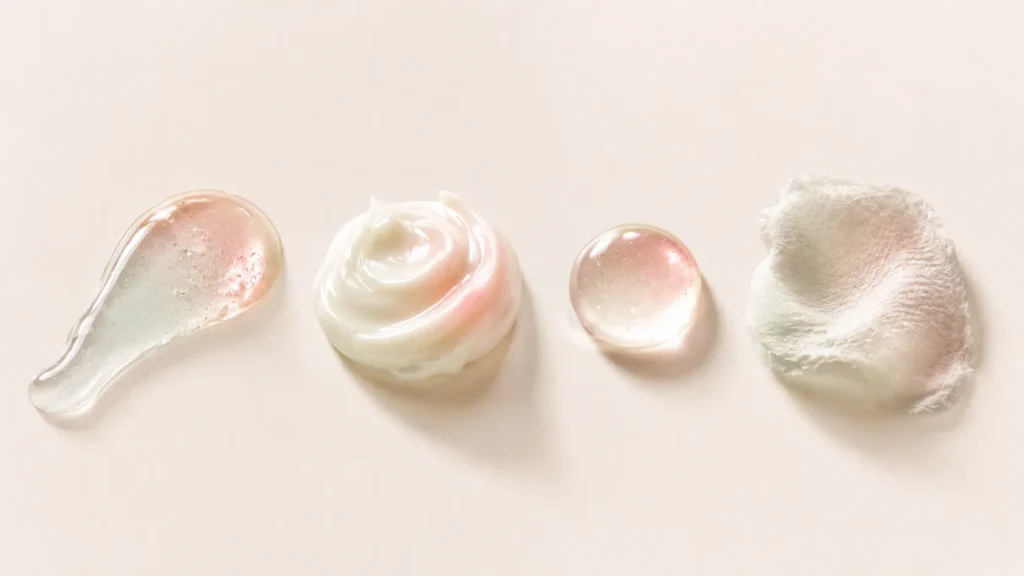
Snail mucin products feel quite different depending on the format.
Essence — the most popular format. Light and fast-absorbing, comfortable for all skin types. COSRX Advanced Snail 96 Mucin Power Essence [VERIFY] is one commonly cited example.
Cream — richer hydration, better suited to dry skin or winter. Good as a final step.
Serum/ampoule — often blended with other actives, so it’s the pick when you’re targeting a specific concern like marks or firmness.
Sheet masks — good for occasional intensive hydration and soothing.
When choosing, check the concentration of snail mucin, what else is in the formula (any soothing ingredients?), and whether the texture suits your skin type. Worth noting: a higher concentration isn’t automatically better — the overall formulation matters more.
The product above is a commonly mentioned example; individual results vary. Confirm specs before buying.
Animal welfare and synthetic alternatives
This is one topic you can’t skip when discussing snail mucin.
Harvesting methods vary by manufacturer. Some collect mucin that snails leave naturally while moving freely; others don’t. Because of that, animal-welfare concerns have been raised consistently.
Against that backdrop, lab-made synthetic snail mucin has started to appear — recreating a similar composition without using snails at all. If vegan or cruelty-free matters to you, these alternatives are worth looking into.
Checking whether a brand is transparent about its harvesting method is another good benchmark.
Frequently asked questions
Does snail mucin really work? Hydration and soothing are fairly well-established, and there’s research behind its effects on pigmentation marks and antioxidant protection. Some claims still need more study.
When do I apply it? After cleansing and toner, before serums and creams. You can use it morning and night; during the day, layer sunscreen over it.
When will I see results? Not immediately. Most people notice changes only after weeks of consistent use.
Are the snails harmed? Harvesting methods vary by manufacturer. If animal welfare concerns you, look for brands that disclose their method, or consider synthetic versions.
Can I use it with other ingredients? It’s quite compatible — hyaluronic acid, niacinamide, centella, and ceramides all pair well.
Can I use it if I have acne? It’s generally gentle, but results vary. For severe acne or if you’re under treatment, consult a dermatologist.
The bottom line
Behind the strange first impression, snail mucin carries 2,500 years of observation and a real body of modern science. It’s no miracle cure, but for hydration and soothing it’s a dependable ingredient. Choose a format that fits your skin type, apply it in the right order, and stay consistent — that’s really all there is to it. For a deeper dive on any topic, follow the detailed guides above.