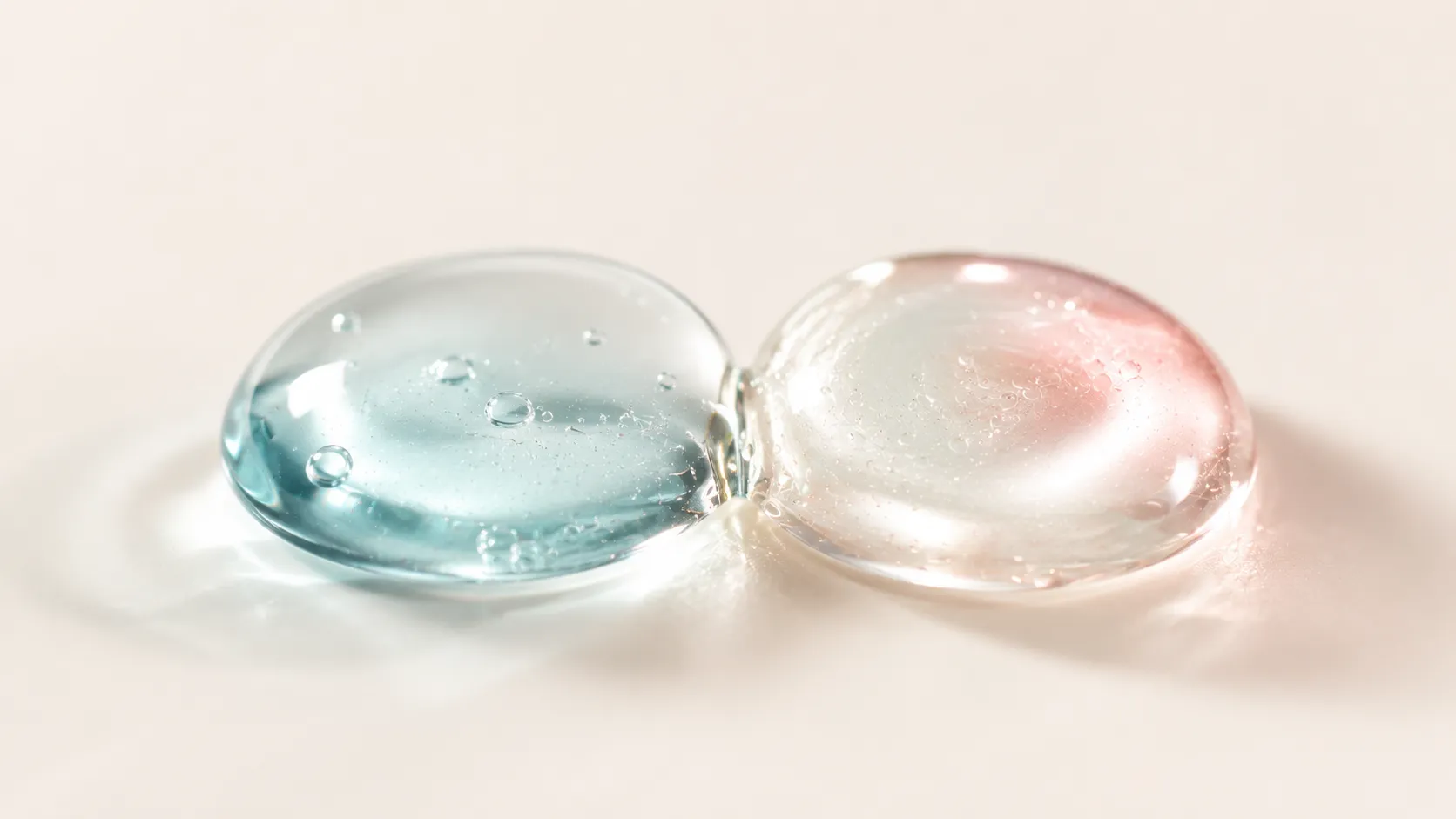
If you’ve done any digging into skincare, you’ve heard these two names. Snail mucin and hyaluronic acid. Both are famous for hydration, and both are staples of K-beauty. Which naturally leads to the question: “Which one should I buy?”
But that question has a hidden trap.
The short answer — and the twist
Here’s the verdict up front: both are good hydrating ingredients. But they work differently, and — this is the key part — this isn’t actually an either/or choice. In many cases, they’re best used together.
Let’s look at why, starting with what each one actually does.
What hyaluronic acid does
Hyaluronic acid (HA) is, in a word, a “moisture magnet.” It can hold hundreds of times its own weight in water. Applied to skin, it pulls moisture in from the surrounding environment and from within the skin to fill it up. It’s a specialist, laser-focused on hydration — and it does that one thing extremely well.
For context, HA behaves a little differently depending on molecule size. Larger molecules form a moisture film on the surface, while smaller ones are said to deliver water a bit deeper.
What snail mucin does
Snail mucin is different. It isn’t a single ingredient but a complex of many: glycoproteins, peptides, antioxidants, and — interestingly — hyaluronic acid too.
So snail mucin doesn’t just hydrate. It’s known to pull double duty, soothing stressed skin and supporting its recovery, among other roles. Hydration is only one of the things it does.
Want a deeper look at what snail mucin actually does? → Does Snail Mucin Actually Work? What the Science Says (2026)
The key difference
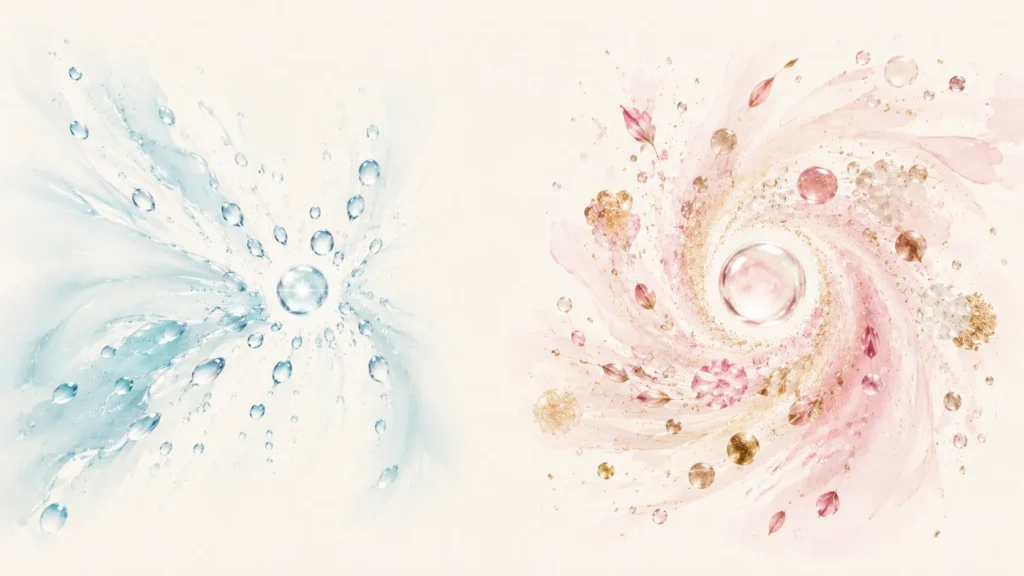
Here’s the summary.
Hyaluronic acid is a specialist that does one thing — pull in moisture — extremely well. It’s purely focused on hydration.
Snail mucin is a multitasker that does a bit of everything. On top of hydration, it also soothes and supports recovery. And it already contains hyaluronic acid inside it.
In other words, HA sits inside snail mucin almost like a subset — which makes them less like competitors and more like an overlapping, complementary pair. That’s why this isn’t really an either/or.
Side by side
| Hyaluronic Acid | Snail Mucin | |
|---|---|---|
| Main role | Pulls in moisture — a hydration specialist | Hydrates, soothes and supports repair |
| How it works | A humectant that holds onto water | Many ingredients, each doing its part |
| Extra benefits | Mostly hydration | Soothing, pigmentation marks, and more |
| Composition | Single ingredient | Multi-ingredient — includes HA itself |
| Common format | Serum, ampoule | Essence, cream |
| Best for | All skin types, especially dry | All types; a plus for sensitive or breakout-prone |
| Using together | Great synergy | Great synergy |
So which should you choose?
Let’s break it down by situation.
If you want hydration only. For light, pure moisture, a hyaluronic acid serum on its own can be plenty.
If you want hydration plus soothing. For stressed or sensitive skin, snail mucin gives you both hydration and calm.
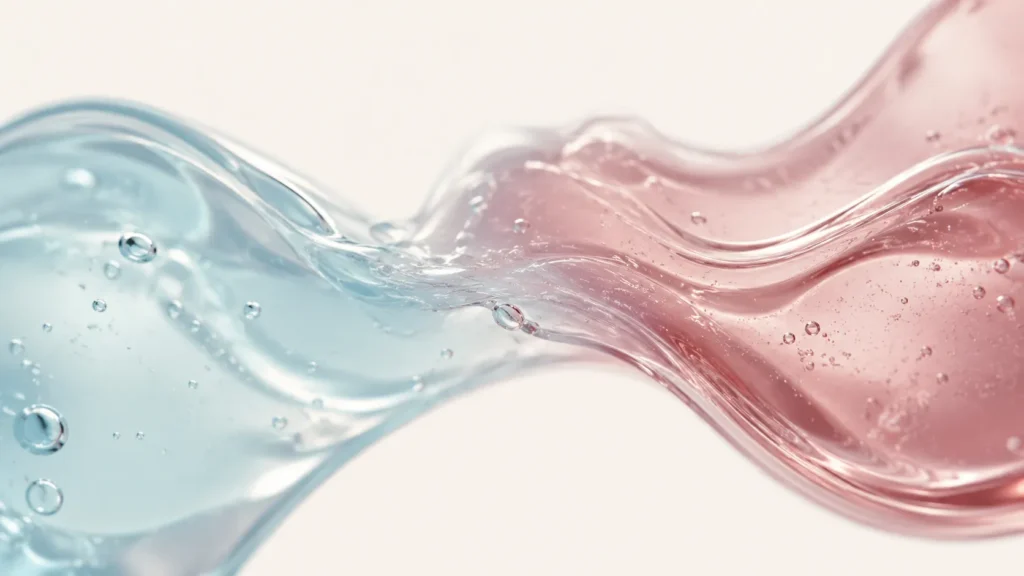
If you want both (recommended). Just use them together. Both are hydrators, so they have great synergy. Following the “thinnest first” rule, you’d typically apply the HA serum or snail essence first and layer heavier products after. Worth noting: many snail products already contain hyaluronic acid, so one product can effectively give you both.
Wondering where snail mucin goes in your routine? → How to Use Snail Mucin: The Right Order & Routine (2026)
Frequently asked questions
Snail mucin or hyaluronic acid — which is better? It depends on your goal. For pure hydration, hyaluronic acid; for hydration plus soothing, snail mucin. Both are good ingredients, so it’s less about which wins and more about choosing by purpose.
Can I use them together? Yes, they pair well. Both are hydrators, so using them together boosts moisture. Apply the thinner texture first.
Which do I apply first? The rule is thinnest first. Usually that means a serum or essence before a heavier cream.
Which is better for dry skin? Both are good. If your skin is very dry, using the two together helps with hydration.
What about sensitive skin? Snail mucin’s soothing role can help. Just patch-test any new product on your inner arm first to check how your skin reacts.
The bottom line
Snail mucin vs hyaluronic acid isn’t really a showdown. Hyaluronic acid is a hydration specialist; snail mucin is a multitasker that does several things, hydration included. And snail mucin already has hyaluronic acid inside it. If you truly must pick one, choose by your goal — but the best answer is usually “both.”