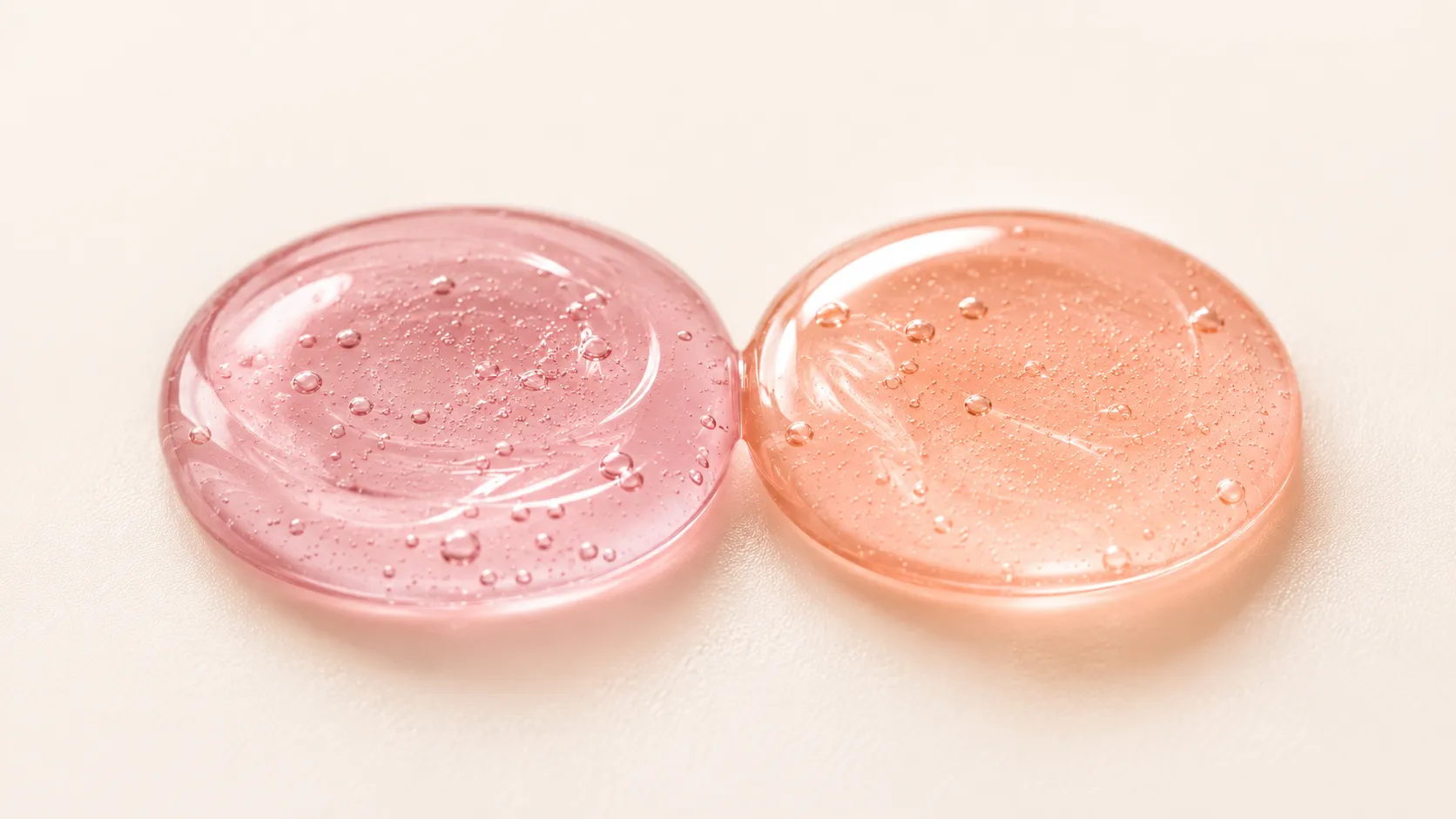
If you named the two most talked-about ingredients in K-beauty in 2026, it would be snail mucin and PDRN. Both are famous for “skin repair” and “regeneration,” and both are everywhere. Which naturally leads to the question: “Which one should I use?”
But as similar as they look, these two are actually aiming at different things.
The short answer — and what’s easy to miss
Here’s the verdict: both are good ingredients, but they have different goals. Snail mucin is a gentle daily ingredient strong on hydration and soothing; PDRN is focused on regeneration and recovery. And — since both are gentle — you can even use them together.
Let’s cover each in 30 seconds, then lay out the key difference.
Snail mucin, in 30 seconds
Snail mucin is the gel-like fluid snails secrete — a complex of glycoproteins, hyaluronic acid, peptides, and more. On top of hydration, it’s widely used to soothe stressed skin, and it’s gentle enough for daily use. Its hydration and soothing benefits are fairly widely accepted.
In a word, it’s closer to a gentle daily hydration-and-soothing routine staple.
More on snail mucin → Snail Mucin: The Complete Guide (2026)
PDRN, in 30 seconds
PDRN is a fragment of DNA sourced from salmon or trout, an ingredient said to support skin regeneration and recovery. It first became famous as an in-clinic injectable, and the injectable form has fairly strong evidence for elasticity, fine lines, and more.
But here’s the important part. Topical products have large molecules that mostly act on the skin’s surface, and matching injectable results isn’t established. Realistically, topical PDRN focuses on surface hydration and barrier support.
More on PDRN → What Is PDRN Skincare? The Salmon DNA Trend Explained (2026)
The key difference
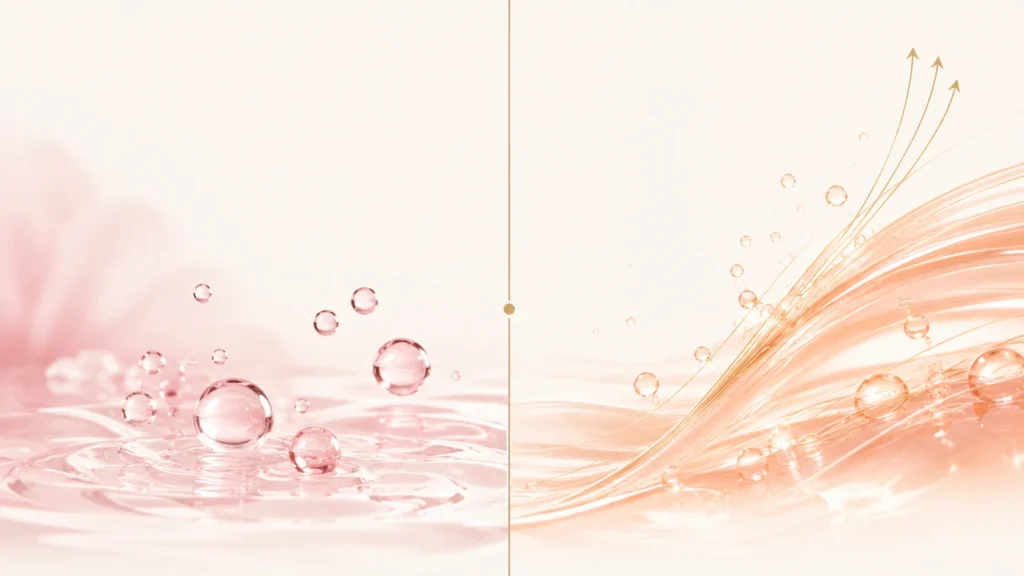
Here’s the summary.
Snail mucin is a versatile daily ingredient strong on hydration and soothing. Its focus is keeping skin hydrated and comfortable every day.
PDRN is focused on regeneration and recovery. It draws attention when the barrier is compromised or there are elasticity and age-related concerns — though remember that topical products are limited to surface action.
To use an analogy: if snail mucin is the comfortable daily hydration-and-soothing care, PDRN is care weighted toward recovery. Not better or worse — different goals.
Side by side
| Snail Mucin | PDRN | |
|---|---|---|
| Source | Snail secretion | Salmon / trout DNA |
| Main focus | Hydration + soothing | Regeneration + recovery |
| Evidence | Fairly broad for hydration and soothing | Strong for injectable; topical is surface-level |
| Common texture | Essence, cream | Serum, cream |
| Best for | Sensitive, dry, or breakout-prone skin across the board | Compromised barrier, elasticity concerns |
| Character | Gentle daily | Recovery-focused |
| Using together | Works | Works |
So which should you choose?
Let’s break it down by goal.
If hydration and soothing come first. For sensitive, dry, or stressed skin, snail mucin takes care of it gently.
If recovery and elasticity come first. For a compromised barrier or age-related concerns, PDRN is focused in that direction. That said, for deep renewal a topical alone has limits, and a procedure is a separate option — one to discuss with a dermatologist.
If you want both. You can use them together. Both are gentle, so layering works. Following the “thinnest first” rule, apply serums and essences in order. Let snail mucin handle soothing and hydration while PDRN adds recovery support. When adding any new ingredient, introduce one at a time and watch how your skin responds.
How to fit ingredients into your routine → How to Use Snail Mucin: The Right Order & Routine (2026)
Frequently asked questions
PDRN or snail mucin — which is better? It’s a difference in goals, not a ranking. For hydration and soothing, snail mucin; for a focus on regeneration and recovery, PDRN.
Can I use them together? Yes, both are gentle, so you can. Apply the thinner texture first, and add new ingredients one at a time to watch how your skin reacts.
Which is better for anti-aging? PDRN is focused on regeneration and recovery. But topical products mostly act on the surface, and results differ from an injectable procedure. For deeper concerns, consult a dermatologist.
What about sensitive skin? Both are gentle, but snail mucin has the edge on soothing. Either way, patch-test any new product on your inner arm first.
Which do I apply first? The rule is thinnest first. Usually a serum or essence before a heavier cream.
The bottom line
PDRN vs snail mucin isn’t about which is better — it’s about your goal. Snail mucin focuses on everyday hydration and soothing; PDRN on regeneration and recovery. Since they’re gentle, you don’t have to pick just one — you can use them together. Choose based on what your skin needs right now: comfortable moisture, or recovery support.