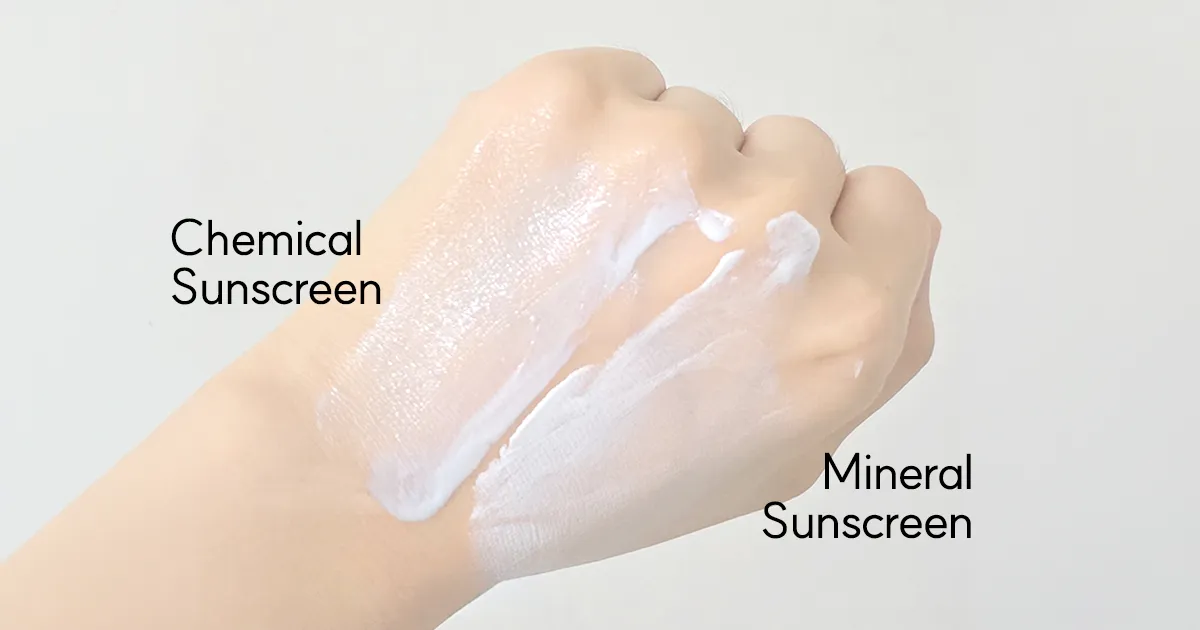
If you’ve spent any time in skincare communities, you’ve seen the same complaint come up again and again: you put on sunscreen, and your face turns pale, chalky, or a little gray. That ghostly film even has a name — white cast — and it’s most noticeable on medium and deeper skin tones. Yet ask anyone who’s switched to a Korean sunscreen, and you’ll hear a version of the same line: this one actually disappears.
This guide breaks down why Korean sunscreens tend to leave so little white cast, how to pick one that vanishes on your skin, what to look for by skin tone and type, and how to apply it so you never see that chalky finish again. It isn’t here to sell you a specific bottle — it’s here to help you choose for yourself.
The short answer
Korean sunscreens that melt into the skin are almost always chemical (organic) sunscreens. White cast comes from mineral filters like zinc oxide and titanium dioxide, which sit on top of your skin and reflect light. Because those particles are white, they leave a pale film behind. The newer chemical filters that Korean brands favor absorb UV instead of reflecting it, so they finish clear. The takeaway: if you have a deeper skin tone, reach for a chemical or hybrid formula rather than a pure mineral one.
Why Korean sunscreens leave less white cast
Here’s the part most people don’t realize — it comes down to regulation, not marketing.
In the US, sunscreen is regulated as an over-the-counter drug, which means every UV filter has to be approved by the FDA. The problem is that the FDA hasn’t cleared a meaningful new filter since the late 1990s. So American brands are stuck working with decades-old ingredients — and those older filters are exactly the ones prone to heaviness and white cast.
Korea takes a different route. Sunscreen there is classified as a functional cosmetic, which gives formulators far more freedom. Korean brands have been using next-generation filters like Tinosorb and Uvinul for years — filters that are lighter, more elegant, and practically invisible on skin. That’s the real reason a Korean sunscreen so often feels like skincare instead of a chore.
So when people say Korean sunscreens are better for deeper skin tones, it isn’t hype. It’s a genuine difference in filter technology.
What actually causes white cast: mineral vs chemical
To choose well, it helps to understand the two ways sunscreen protects you.
Mineral sunscreen — sometimes called physical — uses particles like zinc oxide and titanium dioxide to sit on the surface of your skin and scatter UV rays. Because those particles are naturally white, they can leave a thin pale layer behind. That’s your white cast. Mineral filters are gentle and a solid pick for sensitive skin, but they’re the usual culprit when your face ends up looking ashy.
Chemical sunscreen absorbs UV and converts it into a small amount of heat. Since nothing is bouncing light back at the world, it finishes clear. This is exactly why Korean sunscreens can feel so weightless and invisible.
Hybrid formulas blend the two, aiming for the gentleness of mineral filters with the clear finish of chemical ones.
“I’ll be honest about my own experience here. I’m a man in my early 40s with oily, combination skin, and while white cast matters to me, what mattered even more was whether a sunscreen stung my eyes. Those clean, invisible chemical formulas? They made my eyes sting badly. So if you’re like me and watery, stinging eyes are your real dealbreaker, it’s worth knowing that’s a trade-off chemical sunscreens can come with — and a hybrid, a well-formulated mineral option, or simply keeping product away from the immediate eye area may serve you better.”
How to choose a sunscreen with no white cast
Keep three things in mind and you’ll rarely go wrong.
First, check the filter type. Mineral formulas are the ones most likely to leave a cast, while chemical and hybrid formulas tend to melt in. If you have a deeper skin tone, start with chemical or hybrid.
Second, don’t confuse “no white cast” with “tone-up.” Tone-up sunscreens are designed to brighten your complexion on purpose, which can read as gray or ashy on deeper skin. If you want a genuinely invisible finish, skip the tone-up versions.
Third, match the finish to your skin type. Oily skin usually prefers a fresh, matte finish; dry skin does better with a dewy one. This won’t change whether a formula leaves a cast, but it makes or breaks how much you’ll actually enjoy wearing it.
Korean sunscreens known for little to no white cast
A rundown of formulas widely regarded as low- or no-white-cast.
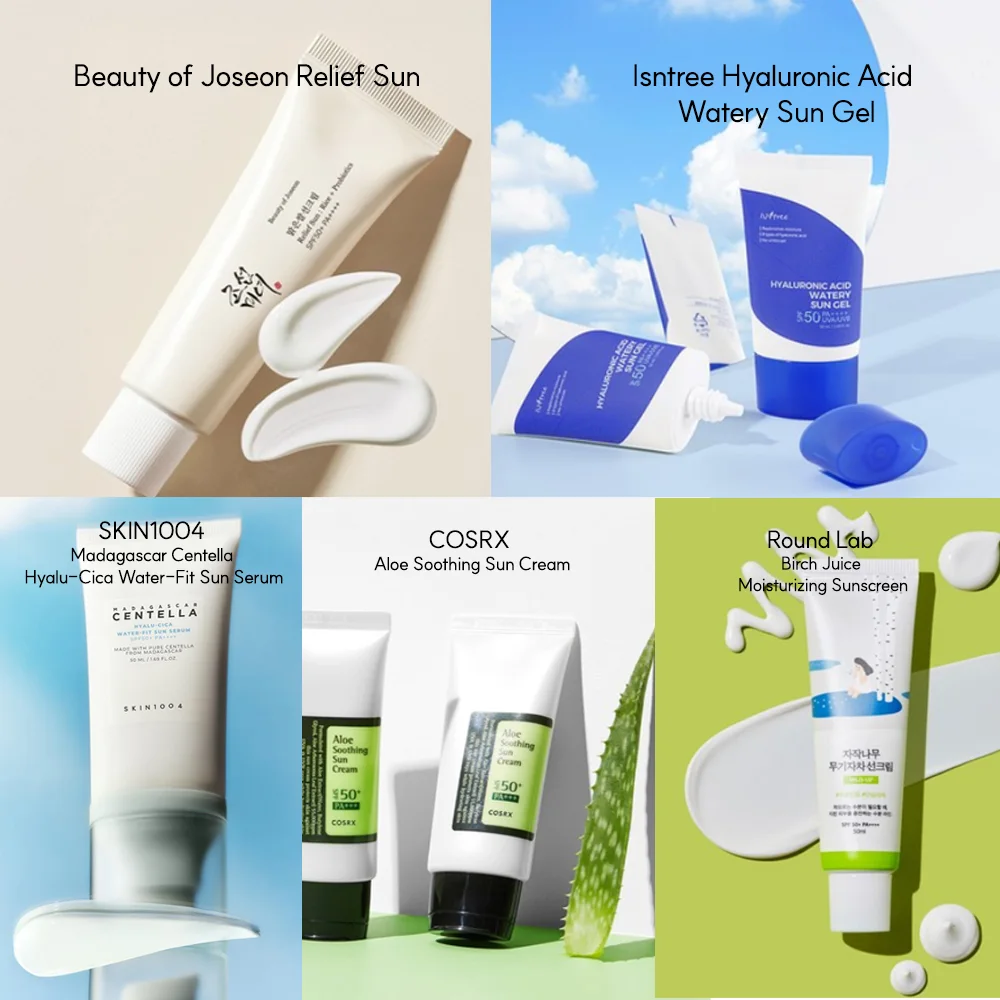
Beauty of Joseon Relief Sun (Rice + Probiotics) — A high SPF50+ PA++++ formula with rice and probiotic ingredients that keep it hydrating. It’s a chemical sunscreen, so it finishes clear, with a soft glow that suits normal to dry skin.
Isntree Hyaluronic Acid Watery Sun Gel — Lightweight almost to the point of feeling like water, with next to no white cast. The hyaluronic acid adds hydration while keeping things fresh, which makes it a good match for oily and combination skin.
SKIN1004 Madagascar Centella Hyalu-Cica Water-Fit Sun Serum — A serum-style sunscreen with centella to calm reactive skin. It absorbs clear, with no cast to speak of.
COSRX Aloe Soothing Sun Cream — Aloe keeps this one light and comfortable, with minimal white cast. An easy, reliable everyday option.
Round Lab Birch Juice Moisturizing Sunscreen — Made with birch sap for a hydrating finish that never feels tight. Gentle enough for dry or easily irritated skin.
“There’s a second thing I always weigh: oil. My combination skin gets shiny by midday, so I gravitate toward sunscreens that feel fresh and take the edge off that oil, rather than ones that finish dewy or add glow. Looking at this list through that lens — going by how each one is formulated more than long-term wear on my own face — the water-light textures win for me: something like Isntree’s Watery Sun Gel or the SKIN1004 serum feels weightless and doesn’t stack onto oil. The richer, glowier options like Beauty of Joseon’s Relief Sun are lovely on drier skin, but on an oily T-zone they can feel a touch greasy by afternoon. One honest caveat: this roundup is built around low white cast, not oil control specifically — so if shine is your real battle, a dedicated matte or sebum-control formula is a conversation of its own.”
Quick picks by skin tone and type
Deeper skin tones: If white cast is your main worry, a chemical formula is the safest bet. Steer clear of tone-up products.
Oily or acne-prone: Look for fresh, lightweight water-gel or serum textures.
Dry: A more hydrating finish will keep tightness at bay.
Sensitive: A calming formula or a gentle hybrid tends to sit best.
How to apply sunscreen without any white cast
Even a great formula can turn chalky if you apply it wrong.
- Build it up in thin layers. Piling it on all at once makes any cast more obvious — two thin layers beat one thick one.
- Give it a minute to absorb. That faint whiteness right after application often fades within a minute or two.
- Press it in, don’t rub. This also helps it sit under makeup without pilling.
- Don’t skimp to avoid cast. Using less sunscreen tanks your protection. Keep the amount you need and solve white cast through formula choice, not by under-applying.
Frequently asked questions
Why do Korean sunscreens have so little white cast? Because Korean brands mostly use newer chemical filters that absorb UV instead of reflecting it. Unlike mineral filters, they finish clear, so there’s little to no pale film left behind.
What kind of sunscreen is best for deeper skin tones? Chemical or hybrid formulas are the safest choice. They absorb more clearly than mineral filters, so they leave little to no cast even on deeper skin.
Do mineral sunscreens always leave a white cast? They tend to, but finely milled modern mineral formulas are better than they used to be. Still, if white cast is your top concern, chemical or hybrid is the safer route.
Is a tone-up sunscreen the same as a no-white-cast one? No. Tone-up products are meant to brighten your skin, which can look gray on deeper tones. If you want an invisible finish, choose a no-white-cast formula rather than a tone-up.
The bottom line
If you’re chasing a sunscreen with no white cast, the key isn’t the brand — it’s the filter type and formula. The reason Korean sunscreens disappear so well comes down to the regulatory freedom that lets them use lighter, more modern filters. Understand how the filters work, match the formula to your skin tone and type, and you can protect your skin every day without ever going gray.