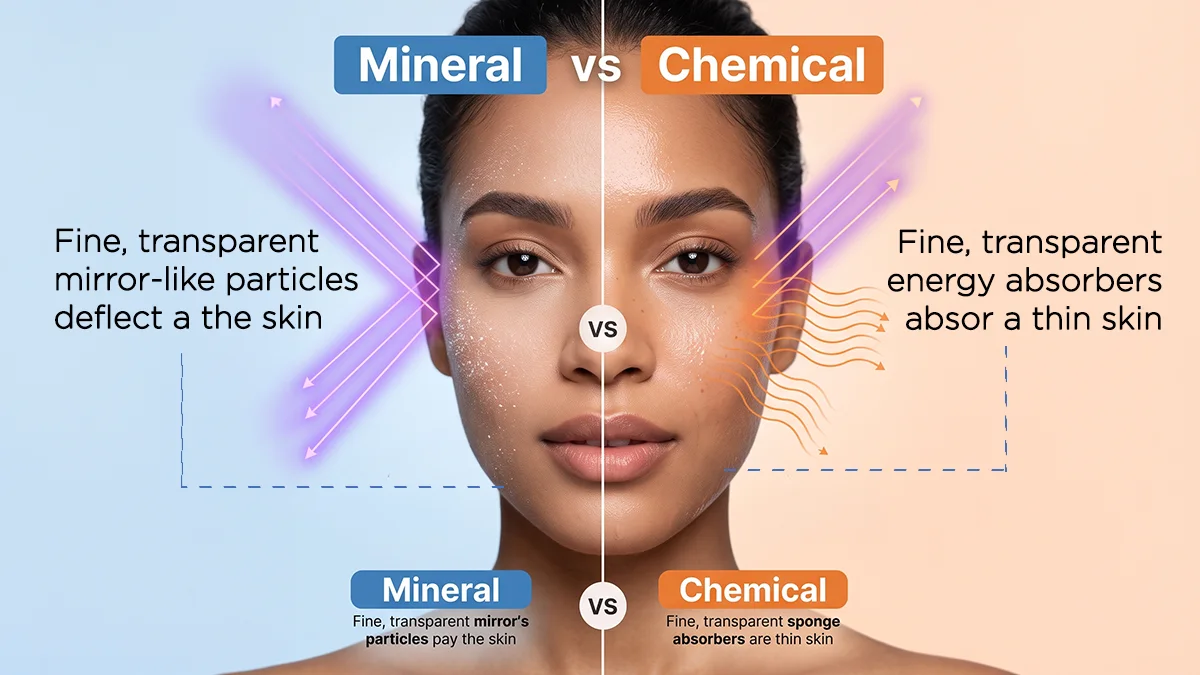
If you’ve shopped for sunscreen lately, you’ve run into the same two words over and over: chemical and mineral. What you probably haven’t found is a clear explanation of how they actually differ, or which one belongs on your face. And if you’ve started using Korean sunscreens, there’s a second question lurking: why do they feel so much lighter than everything else?
This guide breaks down how both types work, the real pros and cons of each, why Korean sunscreens tend to feel so weightless (hint: next-gen chemical filters), and how to figure out which one suits your skin.
The short version
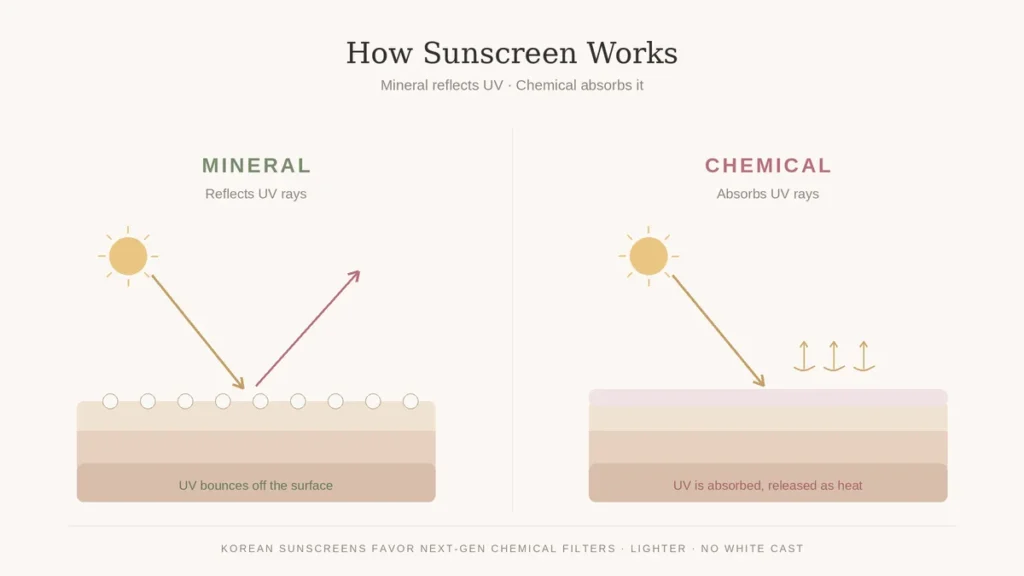
Chemical sunscreen absorbs UV and converts it into a small amount of heat. Mineral sunscreen sits on the surface and reflects UV away. Mineral is gentle but tends to leave a white cast and feel heavier; chemical is light and invisible but can sting your eyes or bother reactive skin. The reason Korean sunscreens feel so light is that most of them use newer chemical filters. If you have a deeper skin tone or want a weightless finish, go chemical or hybrid. If gentleness is your top priority, mineral is the safer bet.
What is mineral sunscreen?
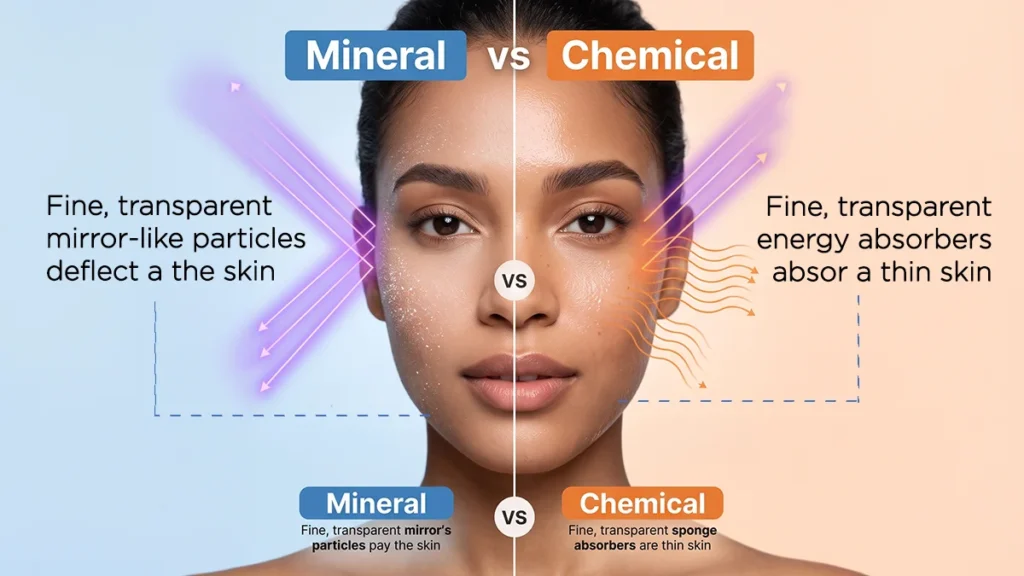
Mineral sunscreen — sometimes called physical — uses particles like zinc oxide and titanium dioxide to form a layer on top of your skin that reflects and scatters UV rays. Think of it as a physical shield.
Its big strength is gentleness. It’s low-irritation enough for sensitive skin and babies, it starts protecting the moment you apply it, and because the ingredients don’t absorb into the skin, it tends to feel low-stakes for reactive complexions.
The downside is white cast and a heavier feel. Because the particles are white, they leave a faint pale film — and on deeper skin tones, that can read as gray. It can also feel a little thick going on.
What is chemical sunscreen?
Chemical sunscreen works differently: its filters absorb UV and release it as a small amount of heat. Since nothing reflects light back, it finishes clear.
Its strength is a light, invisible feel. There’s little to no white cast, it spreads smoothly, and it’s easy to wear every day. That “it feels like skincare, not sunscreen” reaction people have to Korean formulas? Mostly down to these chemical filters.
It has trade-offs too. Because the filters need to absorb UV, they take a little time to settle after application, and for some people they can sting the eyes or irritate sensitive skin.
Hybrid: the best of both
Hybrid formulas use both mineral and chemical filters. They aim to pair the gentleness of mineral with the clear finish of chemical, so neither downside runs to the extreme. If you want something gentle but can’t stand white cast, a hybrid is a smart middle ground.
Why Korean sunscreens lean on next-gen chemical filters
Here’s where Korean sunscreen genuinely pulls ahead — and it comes down to regulation, not marketing.
In the US, sunscreen is regulated as an over-the-counter drug, so every UV filter needs FDA approval. The catch is that the FDA hasn’t cleared a meaningful new filter since the late 1990s. That’s why American brands are stuck with decades-old ingredients — and older filters are exactly the ones that tend to feel heavy and leave a cast.
Korea classifies sunscreen as a functional cosmetic, which gives formulators far more freedom. Korean brands have used next-generation filters like Tinosorb and Uvinul for years — filters that are lighter, clearer, and stronger on UVA protection. That’s why Korean sunscreens are especially good in chemical and hybrid formats.
So which one should you choose?
There’s no single right answer — it comes down to your skin and what you care about most.
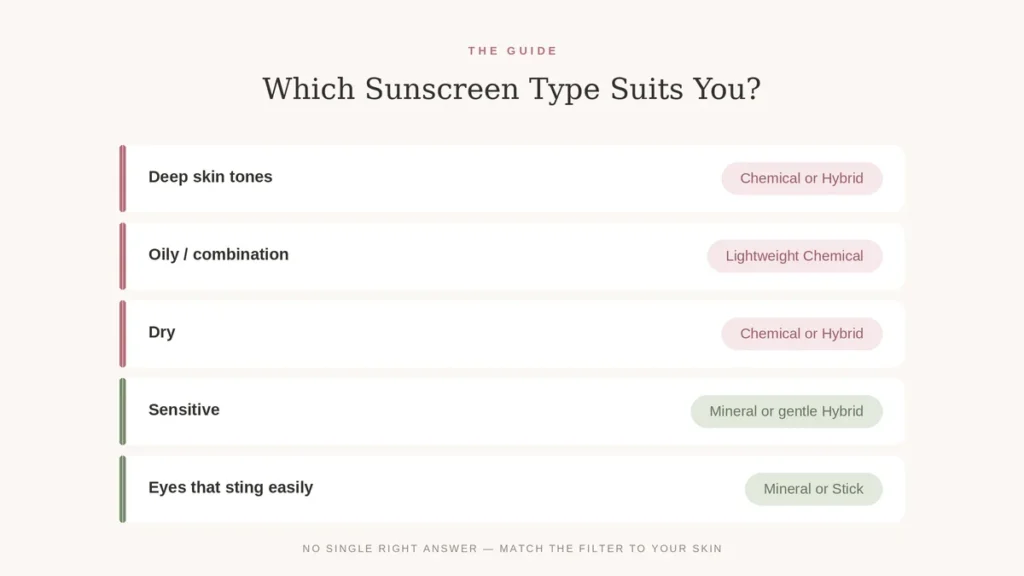
If you have a deeper skin tone, chemical or hybrid is the safe route for avoiding white cast. Oily and combination skin tends to like a lightweight chemical gel or serum. Dry skin does better with a more hydrating chemical or hybrid formula to avoid tightness. Sensitive skin usually sits best with a gentle mineral or a soft hybrid. If your eyes sting easily, reach for mineral or keep sunscreen away from the immediate eye area. And if you reapply often through the day, a light chemical formula is the easiest to live with.
Frequently asked questions
Is chemical sunscreen worse for you than mineral?
Approved UV filters are generally considered safe when used as directed. If a specific ingredient concerns you, choose mineral or hybrid. Either way, wearing sunscreen is better for your skin than skipping it.
Do mineral sunscreens always leave a white cast?
They tend to, but finely milled modern mineral formulas are far better than they used to be. Still, if white cast is your top worry, chemical or hybrid is the safer choice.
Which type stings the eyes?
It’s more often chemical sunscreen. If eye sting is an issue for you, consider a mineral formula or a stick, which is easier to keep away from the eye area.
Are all Korean sunscreens chemical?
No — Korea has plenty of mineral and hybrid options too. But because regulation lets brands use next-gen chemical filters freely, lightweight chemical and hybrid formulas are especially well developed there.
The bottom line
There’s no absolute winner between chemical and mineral. It depends on your skin type, your tone, and what matters most to you. The reason Korean sunscreens feel so light and invisible is that regulatory freedom lets them use lighter, more modern chemical filters. Once you understand how the filters work, you can choose a sunscreen based on your own skin — not a marketing line.