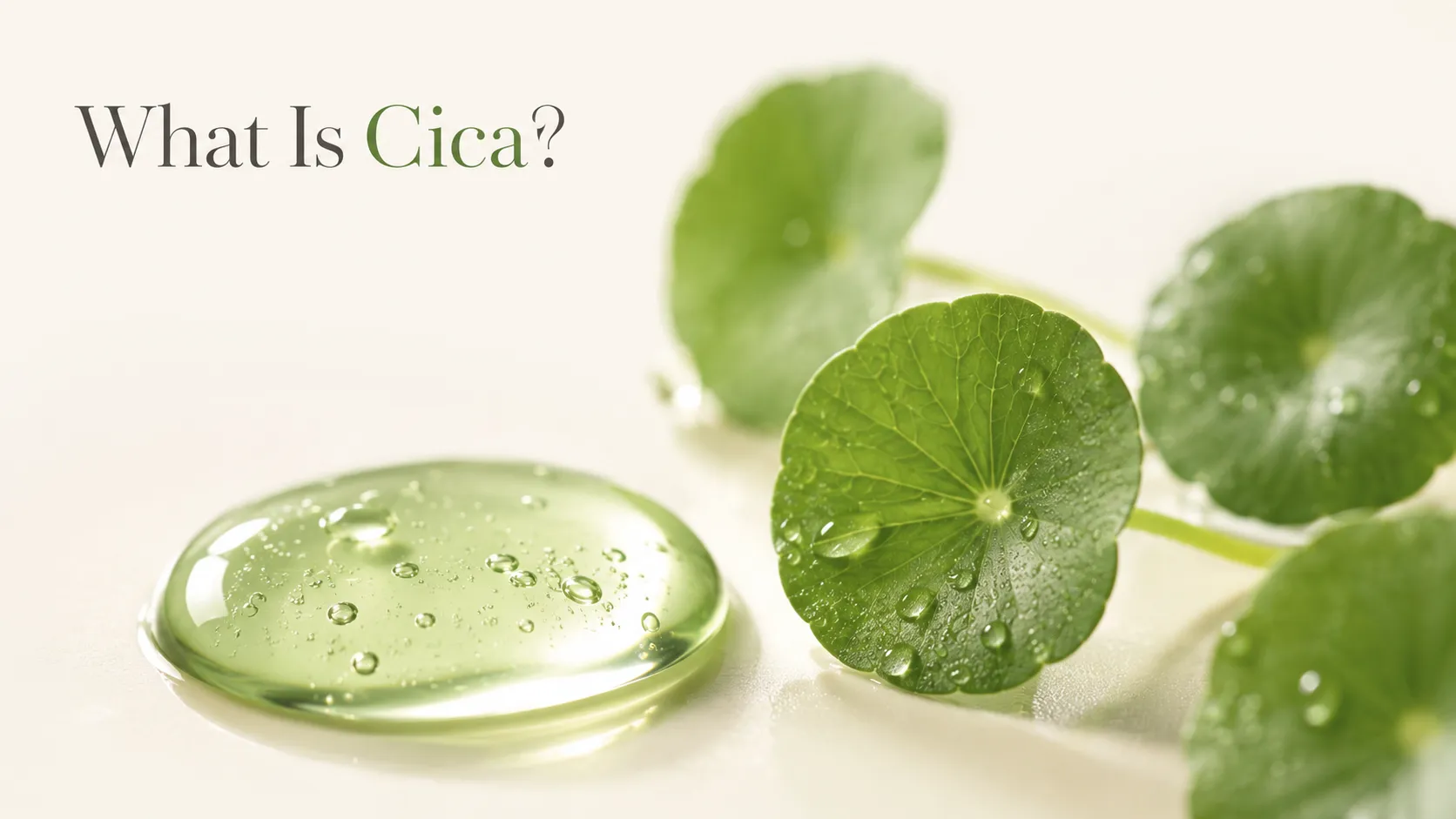
Cica, centella, tiger grass, gotu kola. Dig into skincare and you’ll run into these names everywhere. But did you know they’re all the same ingredient?
Yes — all four refer to a single plant. Just different names. And this gentle herb has become the so-called savior of sensitive skin in 2026, an ingredient K-beauty can’t do without.
The short answer
First, to clear it up: cica is the nickname for an extract of the plant Centella asiatica. It’s famous for calming red, irritated skin. But what makes cica special is that it doesn’t only soothe. More on that below.
What exactly is cica?
Cica is short for Centella asiatica. It also goes by “tiger grass” and “gotu kola” — all the same plant.
The name “tiger grass” has a fun origin story: it comes from the tale that when tigers are wounded, they roll in patches of this plant to heal.
Its history runs deep. It’s been used in traditional medicine across India, China, and Madagascar for over 2,000 years, and in Europe it’s been prescribed medicinally since the 1970s for scars and wound healing. Then the 2018–2020 K-beauty boom brought it into mainstream skincare, and today virtually every Korean brand has a cica line.
The key: cica does two things at once
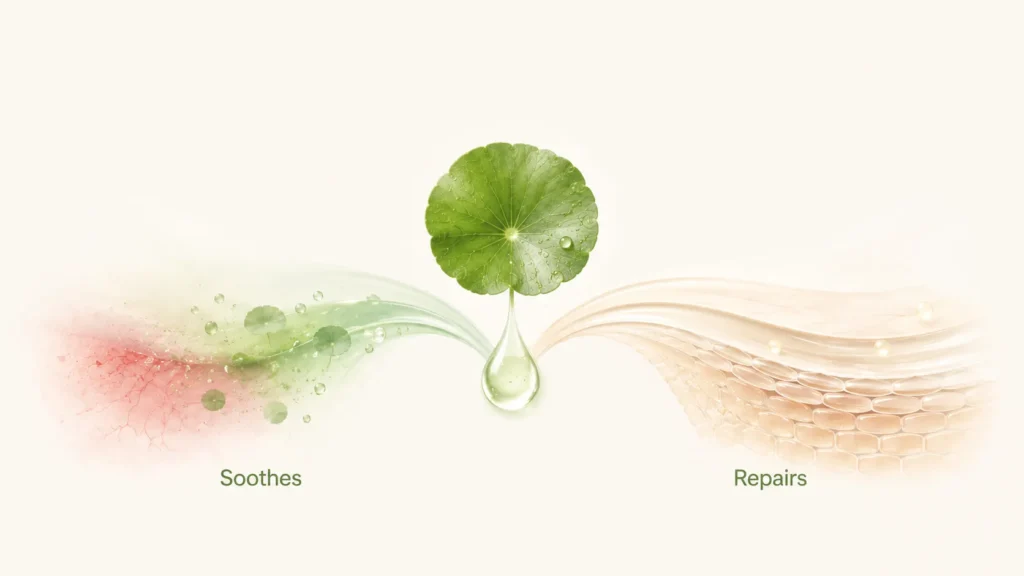
Here’s what makes cica special. Most soothing ingredients do one thing — calm irritation. Cica does two at once.
One is soothing. It calms the inflammation in irritated, reddened skin.
The other is barrier repair. It helps rebuild a compromised skin barrier.
On top of that, it’s also said to stimulate collagen production in aging skin. That’s why cica shows up in an astonishingly wide range of products — from teen acne creams to anti-aging serums. It’s not a “soothing-only” ingredient; it soothes while it repairs.
The four key actives
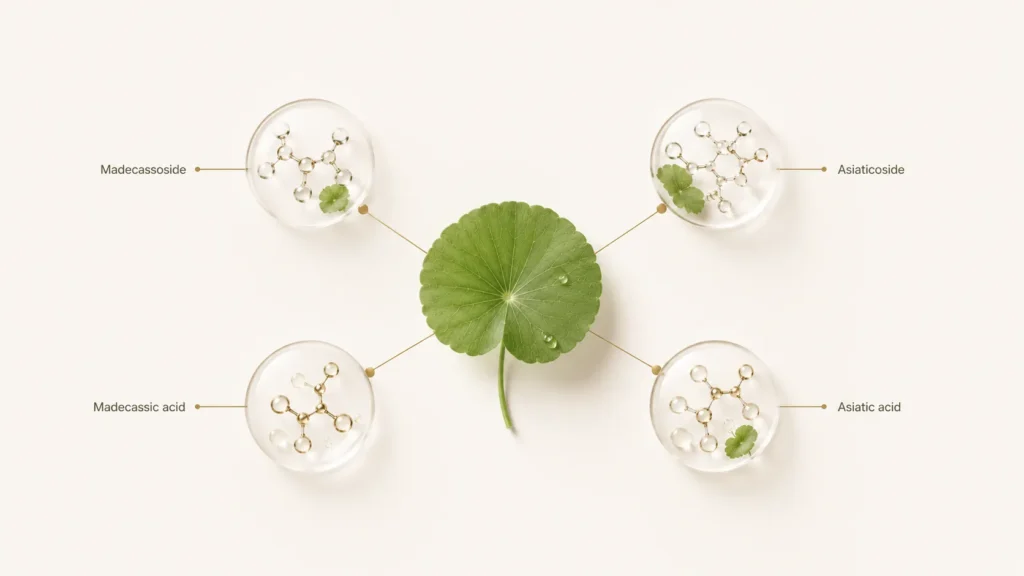
Cica’s power comes from four active compounds (triterpenoids).
Madecassoside — the most potent anti-inflammatory of the group. It calms redness and irritation and helps sensitized skin recover. It’s now popular enough that people search for “madecassoside” on its own.
Asiaticoside — supports collagen production and is involved in improving scars and marks.
Madecassic acid and asiatic acid — contribute to antioxidant protection and barrier support.
A tip for reading labels: a product listing only “Centella Asiatica Extract” can vary widely, from watered-down to concentrated. But when specific actives like madecassoside appear high on the ingredients list, it’s more likely a precisely formulated product.
What the science says
Let’s look at the evidence.
Calming redness and irritation. This is cica’s headline benefit. Madecassoside is understood to suppress inflammatory signals, reducing redness and sensitivity. For easily flushed skin like rosacea, studies have reported reductions in redness and sensitivity over several weeks.
Barrier repair. Research suggests it supports ceramide production and helps the structure of the stratum corneum. It can help a barrier worn down by over-exfoliation or too many actives.
Collagen and elasticity. In a 2015 clinical trial, a cream with madecassoside showed improvements in elasticity and wrinkles over 12 weeks.
For balance, though: cica is not a cure-all, and it isn’t a medical treatment for skin conditions. As a cosmetic, cica is most accurately understood not as a disease treatment but as a soothing, barrier-supporting ingredient that helps skin feel more comfortable within a well-formulated routine.
Who it’s for, and how to use it
Cica suits sensitive, reactive, or easily flushed skin especially well. With its low irritation risk, it’s considered one of the safest actives to try in skincare.
There’s a smart tip for using it: when you’re using an active like retinol or an acid (AHA/BHA), layering cica as a “calming layer” can help your skin tolerate that active better.
Curious about combinations that help you tolerate retinol or PDRN? → PDRN vs Retinol: Which Should You Use? (2026)
Note: when choosing a cica product, check whether potentially irritating ingredients — like denatured alcohol, strong fragrance, or high concentrations of essential oils — are in the mix. If you have a skin condition like rosacea or eczema, consult a dermatologist. This article is for information, not medical advice.
Frequently asked questions
Are cica and centella different? They’re the same. Cica is the nickname for Centella asiatica, and tiger grass and gotu kola all refer to the same plant.
What does cica do? It soothes and repairs the barrier. Calming redness and irritation is its headline benefit, and it also helps rebuild a compromised barrier.
Is it good for sensitive skin? Yes, it’s one of the gentlest ingredients in skincare. Just avoid products where it’s paired with potentially irritating ingredients like strong fragrance.
What is madecassoside? It’s the most potent anti-inflammatory of centella’s active compounds, key to calming redness and irritation.
Does it help with acne or marks? It’s said to be involved in soothing and improving marks. But it isn’t a primary treatment for clogged pores or dark spots — use it as a calming layer alongside the active that targets those.
What should I look for on a label? Check whether Centella Asiatica Extract, or specific actives like madecassoside and asiaticoside, appear high on the ingredients list.
The bottom line
Cica, centella, and tiger grass are the same ingredient under different names. And this gentle herb’s real strength is that it soothes and repairs the barrier at the same time — calming stressed, tired skin while helping it recover. It’s no cure-all, but for sensitive, reactive skin it’s one of the most dependable soothing ingredients out there.