You cleansed, and that’s all — but your cheeks are already flushed. If new products scare you because they might trigger a reaction, and if everything you apply seems to sting or burn, you know the struggle of sensitive, easily flushed skin. For skin like this, the key isn’t adding more — it’s irritating less.
That’s why cica gets recommended so often for this kind of skin. But to use cica well, there’s something you need to know first: what kind of redness you actually have.
The short answer
First, to clear it up: cica (centella) is an ingredient known to calm redness and irritation and help repair a compromised barrier. With its low irritation risk, it’s considered one of the safer ingredients for sensitive skin to try. But you need to know two things: not all “redness” is the same, and not every “cica product” is gentle.
Redness comes in different types
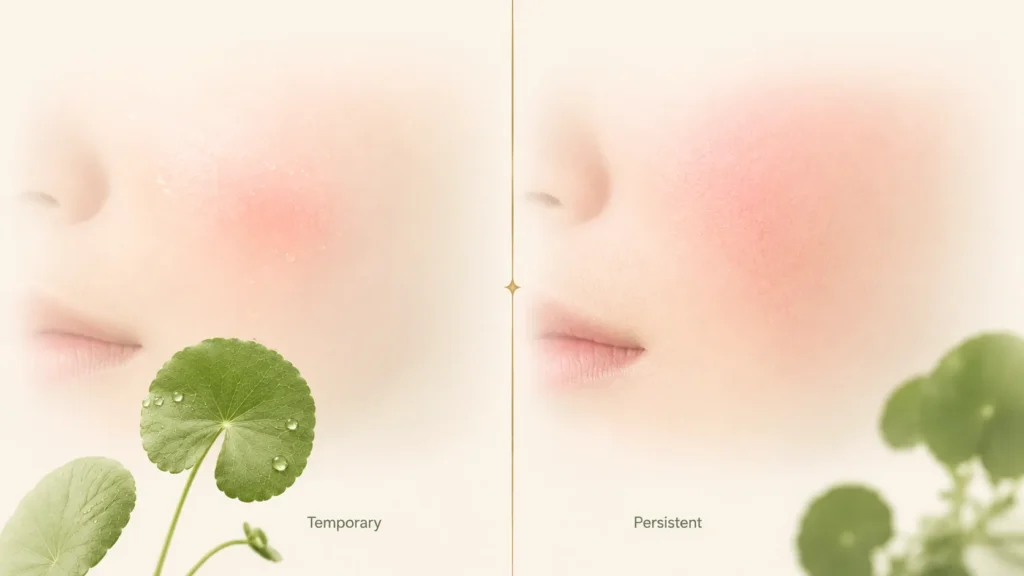
Redness varies by cause. Broadly, you can think of two types.
Temporary, irritation-based redness. The kind that flares up temporarily from cleansing, exfoliating, a new product, or weather changes. It shows up more easily when the barrier is weakened, and it can be helped through soothing and barrier repair.
Persistent redness. The kind that lingers after acne or irritation has settled, or a face that’s always flushed. It can be related to dilated capillaries or ongoing sensitivity.
Here’s an important distinction. General sensitivity and redness like the above can be helped with gentle skincare — but chronic, severe redness like rosacea is a skin condition. In that case, a cosmetic like cica may help calm things somewhat, but it doesn’t treat the condition itself. If symptoms are severe or persistent, you must consult a dermatologist.
What cica does for sensitive skin
So what role does cica actually play for sensitive skin?
Soothing. It’s strong at calming red, irritated skin. Centella’s active compound madecassoside is understood to be the main player in this role.
Barrier repair. Research suggests it helps rebuild a compromised skin barrier. A stronger barrier reacts less to outside triggers, which can help break the cycle where redness flares easily.
Gentleness. With its low irritation risk, cica is relatively easy to try even for skin that reacts to many ingredients.
Curious about the ingredient itself? → What Is Cica Skincare? Centella Asiatica Explained (2026)
More on madecassoside → What Is Cica Skincare? Centella Asiatica Explained (2026)
How to choose a cica product for sensitive skin
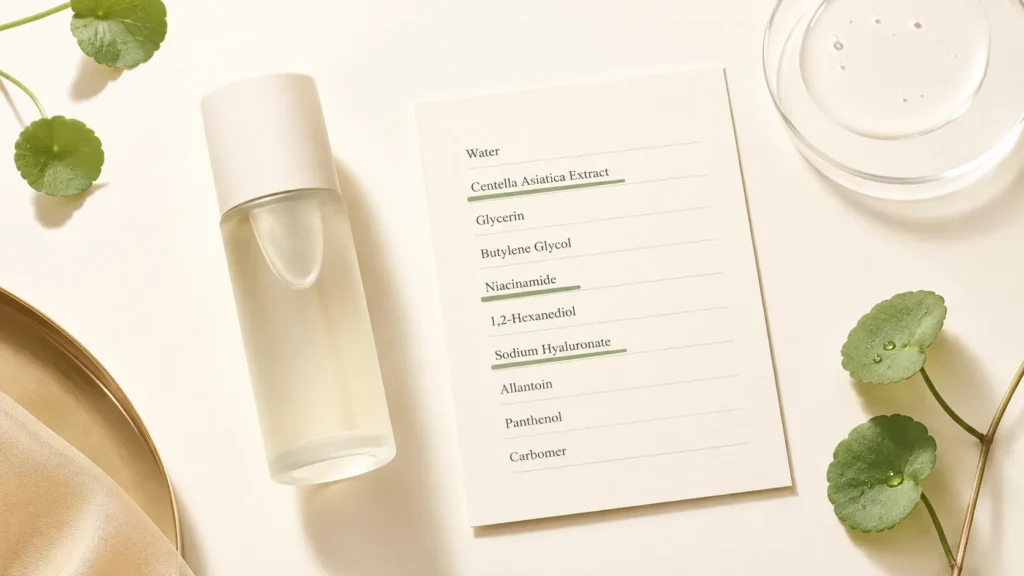
Here’s the part that matters in practice. Not every “cica product” is gentle. If your skin is sensitive, check for these on the ingredients list.
Irritants to avoid. Ironically, some soothing products contain irritating ingredients. Denatured alcohol (alcohol denat.), strong synthetic fragrance (fragrance/parfum), and high concentrations of essential oils can irritate sensitive skin, so it’s worth checking.
A simple ingredients list. Rather than an overly long, complex list, a product built simply around soothing and hydration is easier on reactive skin.
Whether madecassoside is named. If redness is your main concern, a product that specifically lists madecassoside may have an edge for targeted calming.
How to use it: a sensitive-skin routine
The gentler your skin, the more “less and slower” is the rule.
Patch-test first. Before applying a new cica product to your face, dab it on your inner arm or behind your ear for a few days to check the reaction.
Keep it minimal. The more irritated your skin, the fewer steps the better. A simple routine — gentle cleanse → cica product → moisturizer → (AM) sunscreen — is plenty.
As a calming layer. Cica works well as a soothing layer between other products. If you use an active like retinol or an acid, using cica alongside can help your skin take that ingredient more comfortably.
Respond to signals. If a cica product actually stings or reddens your skin, it may not be right for you. Stop and let your skin calm down.
Curious how to pair with actives? → PDRN vs Retinol: Which Should You Use? (2026)
What skincare can’t fix
This part must be said. Cica is a gentle soothing ingredient, but it is not a cure-all.
If you have persistent, severe redness, burning, stinging, or a bumpy rash that keeps returning, it may be a skin condition like rosacea, eczema, or seborrheic dermatitis. Conditions like these are not “treated” by cosmetics, and misguided self-care can even make them worse.
In that case, you must consult a dermatologist. A soothing ingredient like cica can support professional treatment, but it can’t replace it. This article is for information, not medical advice.
Frequently asked questions
Does cica really help with redness? It’s known to help manage general sensitivity and redness through soothing and barrier repair. But redness from a medical condition is a dermatologist’s domain.
Is cica safe for sensitive skin? It’s gentle. But avoid products where it’s paired with irritants like fragrance or alcohol, and patch-test anything new.
Can I use it for rosacea? Rosacea is a skin condition. Cica may help calm things somewhat but doesn’t treat it, so you must consult a dermatologist.
Can I use cica every day? It’s gentle, so generally yes. But if a reaction appears, stop using it.
I used cica and got redder. That product may not suit you, or another ingredient may have irritated your skin. Stop and let your skin calm down; if it persists, see a professional.
Which cica product should I choose? One with few irritants and a simple ingredients list. If redness is your concern, consider a product that names madecassoside.
The bottom line
For sensitive, easily flushed skin, cica is a dependable soothing ingredient. But remember two things: redness comes in types, so it needs an approach matched to the cause, and not every “cica product” is gentle, so check for irritants. And above all, severe, persistent redness is the domain of a dermatologist, not skincare. Cica is a good companion for calming reactive skin day to day — not a solution for a condition.