Ask people to name one ingredient for sensitive skin, and many will think of cica. Known as the savior of easily flushed, reactive skin, it’s become an ingredient K-beauty can’t do without in 2026 — so much so that virtually every Korean brand has a cica line.
This guide covers everything you need to know about cica: what it is, why it’s special, what’s in it, how to choose and use it, and when you need to go beyond skincare to a dermatologist. Get the big picture here, then follow the links to go deeper.
What is cica?
Cica is the nickname for an extract of the plant Centella asiatica. It also goes by “tiger grass” and “gotu kola” — all the same plant.
The name “tiger grass” comes from the tale that wounded tigers roll in patches of this plant to heal. It’s genuinely been used in traditional medicine across India, China, and Madagascar for over 2,000 years, and prescribed medicinally in Europe since the 1970s for scars and wounds. Then the 2018–2020 K-beauty boom brought it into mainstream skincare.
More on what it is and the name tangle → What Is Cica Skincare? Centella Asiatica Explained (2026)
The key: cica does two things at once
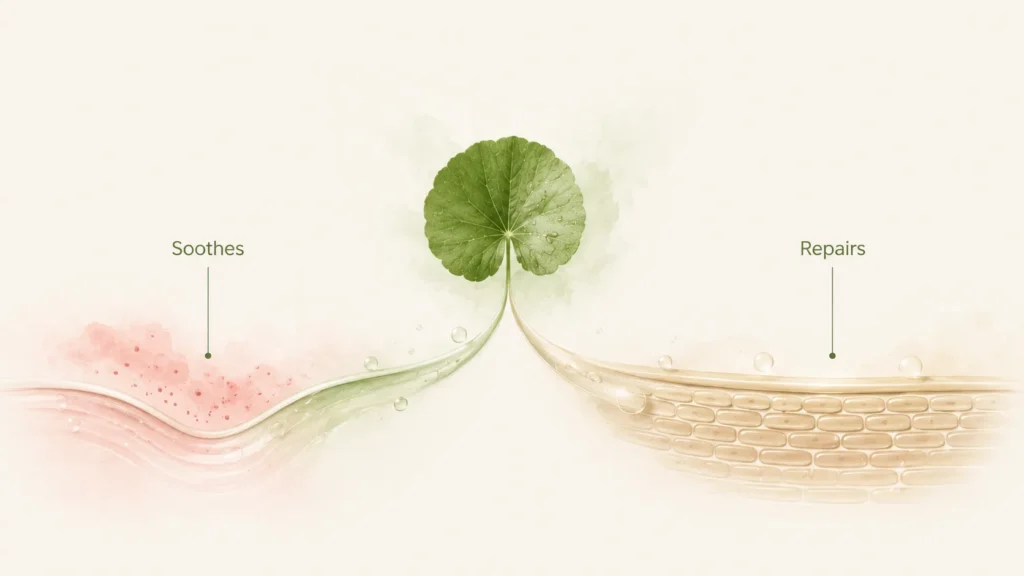
Here’s what makes cica special. Most soothing ingredients do one thing — calm irritation. Cica does two at once.
One is soothing. It calms red, irritated skin.
The other is barrier repair. It helps rebuild a compromised skin barrier.
On top of that, it’s also said to stimulate collagen production in aging skin. That’s why cica appears in everything from teen acne care to anti-aging serums. It’s not a “soothing-only” ingredient; it soothes while it repairs.
The actives: madecassoside and its companions
Cica’s power comes from four active compounds (triterpenoids): madecassoside, asiaticoside, madecassic acid, and asiatic acid.
Among them, madecassoside is considered the main player in calming redness — popular enough now that people search for it on its own. Asiaticoside is known to support collagen production.
Here’s a practical distinction. A product listing only “Centella Asiatica Extract” contains the four compounds blended naturally; one that specifically names “madecassoside” likely uses a more purified, concentrated form. It’s not about a winner — the roles differ. Madecassoside for quick, targeted calming; the full extract for overall recovery.
More on madecassoside and reading labels → What Is Madecassoside? Centella’s Star Active Explained (2026)
What the science says
Let’s look at the evidence.
Calming redness and irritation. Cica’s headline benefit. Madecassoside is understood to be strong at calming redness and sensitivity.
Barrier repair. Research suggests it supports ceramide production and helps the structure of the stratum corneum. It can help a barrier worn down by over-exfoliation or too many actives.
Collagen and elasticity. In a 2015 clinical trial, a cream with madecassoside showed improvements in elasticity and wrinkles over 12 weeks.
For balance, though: cica is not a cure-all, and it isn’t a medical treatment for skin conditions. It’s most accurately understood as a soothing, barrier-supporting ingredient that helps skin feel more comfortable within a well-formulated routine.
Who it’s for: sensitive, red skin
Cica suits easily flushed, reactive, or sensitive skin especially well. With its low irritation risk, it’s considered one of the safest ingredients to try in skincare.
But redness comes in types. Redness that flares temporarily from cleansing, exfoliating, or weather can be helped through soothing and barrier repair — but chronic, severe redness needs a different approach. More on that below.
More on using cica for sensitive, red skin → Cica for Sensitive Skin: A Calming Guide (2026)
How it compares to other soothing ingredients
The most common comparison is with snail mucin.
Both are gentle soothing ingredients, but their focuses differ. Cica is strong at calming redness and irritation and repairing the barrier; snail mucin is strong at replenishing moisture. If redness and sensitivity are your concern, lean cica; if dryness and lack of moisture, lean snail mucin. Both are gentle, so you can also use them together.
The full comparison → Cica vs Snail Mucin: Which Should You Use? (2026)
For context, cica also pairs comfortably with niacinamide, hyaluronic acid, and ceramides.
How to use it, and how to choose
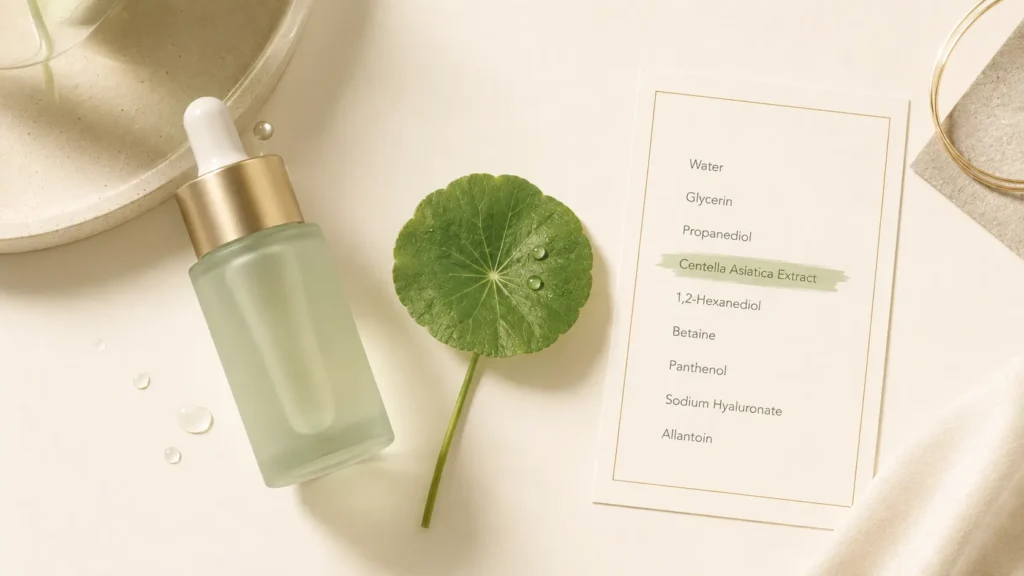
A cica product works well as a soothing step between other products. Apply it after cleansing and toner, and in the morning layer sunscreen over it. If you use an active like retinol or an acid, using cica alongside can help your skin take that ingredient more comfortably.
There’s something to check when choosing. Ironically, some “soothing” products contain irritants. Denatured alcohol, strong synthetic fragrance, and high concentrations of essential oils can irritate sensitive skin, so check the ingredients list. A simple formula is easier on reactive skin than an overly complex one. And if redness is your main concern, consider a product that names madecassoside.
How to pair with actives → PDRN vs Retinol: Which Should You Use? (2026)
A caution: conditions aren’t skincare’s domain
This part must be said. Cica is a gentle soothing ingredient, but it is not a cure-all.
If you have persistent, severe redness, burning, stinging, or a recurring rash, it may be a skin condition like rosacea, eczema, or seborrheic dermatitis. Conditions like these aren’t “treated” by cosmetics, and misguided self-care can make them worse. In that case, you must consult a dermatologist. A soothing ingredient like cica can support professional treatment, but it can’t replace it.
This article is for information, not medical advice.
Frequently asked questions
Are cica, centella, and tiger grass different? They all refer to the same plant. Cica is the nickname for Centella asiatica, and tiger grass and gotu kola are the same thing.
What does cica do? It soothes and repairs the barrier. Calming redness and irritation is its headline benefit, and it also helps rebuild a compromised barrier.
What is madecassoside? It’s the active in centella known to be strongest at calming redness. A product that names it may use a purified, concentrated form.
Is it safe for sensitive skin? It’s gentle. But avoid products where it’s paired with irritants like fragrance or alcohol, and patch-test anything new.
Can I use it for rosacea? Rosacea is a skin condition. Cica may help calm things somewhat but doesn’t treat it, so consult a dermatologist.
Can I use it with other ingredients? It pairs comfortably with niacinamide, hyaluronic acid, and ceramides. With snail mucin, you can cover both soothing and hydration.
The bottom line
Cica is a dependable ingredient for sensitive skin that soothes and repairs the barrier at once. It’s the same plant under different names — centella, tiger grass — and it carries a key active, madecassoside. Its low irritation risk makes it easy for reactive skin to try, but remember two things: not every “cica product” is gentle, so check the label, and severe, persistent redness is a dermatologist’s domain, not skincare’s. Each topic is covered in more depth in the detailed guides above.